
Why these seven phrases matter
日本の避難の放送は、辞書で調べる時間を待ってくれません。
Evacuation announcements in Japan don't wait for you to look up a word in the dictionary.
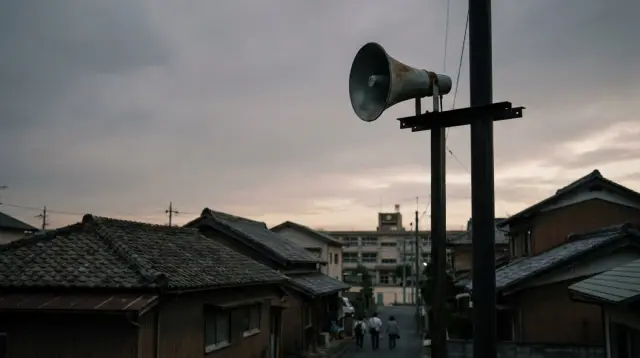
町のスピーカーが一回鳴って、スマホが一回震えます。何を伝えているか分かるまで、数秒しかありません。
The neighborhood speaker plays once, your phone buzzes once, and you have a few seconds to understand what it's telling you to do.
でも、こういう放送で使う言葉は多くありません。
Luckily, the language used in these announcements is narrow.
多くの市区町村は「やさしい日本語」で放送します。外国人のための、簡単な日本語です。文が短くて、漢字が少なくて、難しい言葉を使いません。
Many local governments broadcast in やさしい日本語 — simplified Japanese for foreign residents: short sentences, few kanji, avoiding difficult Chinese-derived words.
Seven phrases you'll hear
ひなん してください。
Please evacuate.
あぶない です。にげて ください。
It's dangerous. Please run.
たかい ところへ いって ください。
Please go to higher ground.
いえの なかに いて ください。
Please stay inside your house.
おおあめ が ふります。きを つけて ください。
Heavy rain is coming. Please be careful.
ひなんじょ は ○○しょうがっこう です。
The evacuation site is ○○ Elementary School.
みず と たべもの を よういして ください。
Please prepare water and food.
One thing to watch for
「いえの なかに いて ください」も、避難の指示の一つです。
"Please stay inside your house" is also an evacuation instruction.
外にいるほうが危ないとき(強い風や、もう水が上がっているときなど)、そう伝えます。
When it's more dangerous outside than in — strong wind, water already rising — the authorities tell you to stay put.
この言葉を聞いたら、外に出ないでください。
Hearing this line means don't go outside.
Words in this article
Do it today, not when the storm hits
近くの避難所がどこの学校か調べて、スマホの緊急速報をオンにしてください。
Look up which school your nearest evacuation site is, and turn on emergency alerts on your phone.
二つあわせて十分ほどです。
Both take ten minutes.