

How memory is built
Not more studying. Reviewing at the right moment.
Memory drops fastest in the first few days and only then levels off — that is the Ebbinghaus forgetting curve. Review too early and you waste the session; too late and you start over. GoMe aims for the point just before forgetting: each well-timed review pulls memory back up and flattens the curve, so the gap to the next review keeps growing.
↑ RetentionTime →
- No review
- Spaced review
Faint line: studied once and left alone. Solid line: reviewed right as it fades — every review lifts memory and buys a longer stretch before the next one.
The spacing ladder
- 1days
- 3days
- 7days
- 14days
- 30days
- 60days
- 120days
Recall it and the card climbs a rung; blank on it and the card drops to the bottom. Nothing is ever "learned and dropped" — it just moves out to longer and longer gaps.
-
Every card on its own schedule
Each word, kanji, and grammar pattern is a card with its own rung and its own due date. What you know drifts further out; what trips you up comes back soon. No rigid batches that make you redo a whole lesson over three stubborn words.
-
Recall it, do not reread it
During review the translation is hidden and no stroke guide is shown — you have to pull the answer out of your own head. That act of retrieval is what hardens memory; rereading old material only creates a feeling of familiarity.
-
Your mistakes are collected
Wrong answers do not vanish. They gather into their own practice set, and the matching card drops back down the ladder so you restart from the part you genuinely have not got.
-
Kanji graded on evidence
It never asks "do you feel like you know this?" — you do the real task: pick the meaning, pick the reading, write it by hand on a blank canvas. The result decides the next interval.
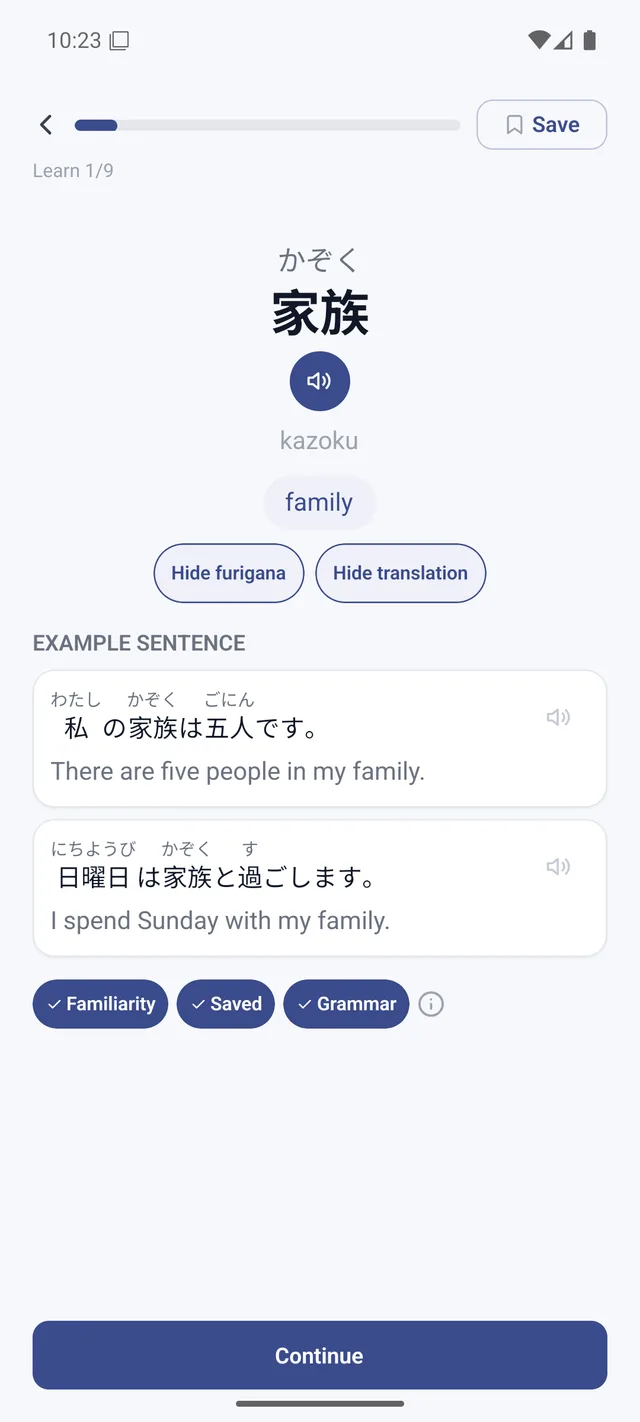
Learning has to be used
From lesson to mock exam, in one continuous line
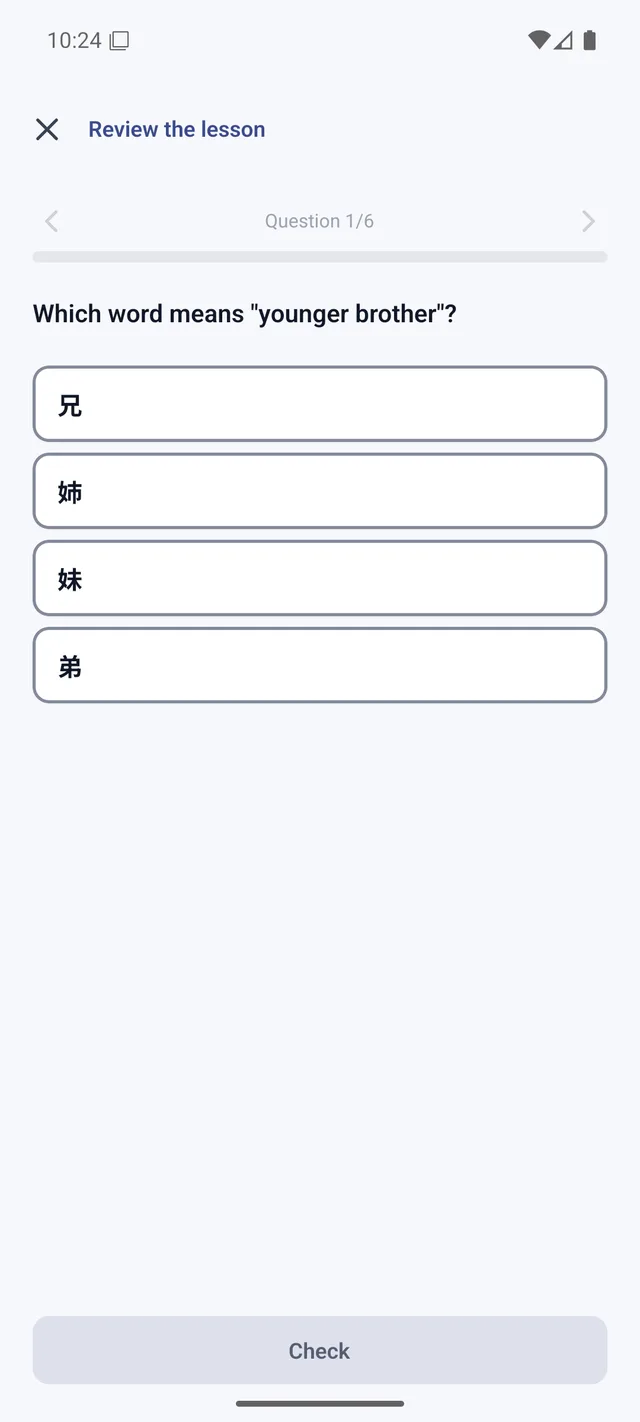
Every lesson runs a closed loop: take in new material, drill it on the spot, then quiz to lock it down. What you get wrong is recorded and finds its way back into the review queue.
-
A quiz right after the lesson
Ten questions on exactly what you just covered, with a way back to the material at any point.
-
Practice sets on the JLPT pattern
All three sections, the way the real paper runs, so the rhythm and the clock are familiar before exam day.
-
A library of your own
Save hard words, keep personal notes on any entry, and watch your vocabulary grow month over month.
-
A daily nudge
On-device reminders bring you back before cards fall due — turning them on or off is entirely yours.
Ready for the first leg?
GoMe Nihongo is out on the App Store and Google Play — download it and start today.
The N5–N1 labels in the app are estimates against the JLPT framework, based on community benchmarks. GoMe Nihongo is not affiliated with the Japan Foundation or JEES, the organisers of the JLPT. Dictionary and kanji data come from open sources (JMdict, KANJIDIC2, KanjiVG…), credited in full in the app’s Credits screen.