
What the job involves
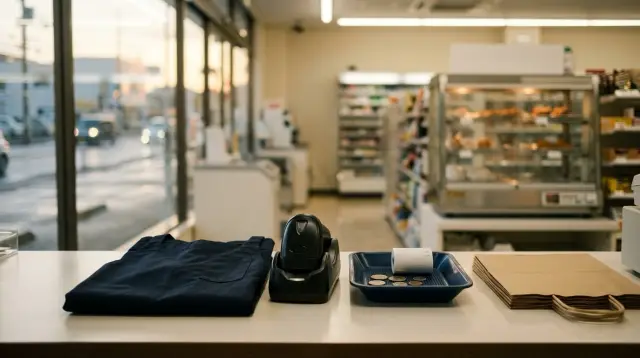
コンビニのアルバイトは、留学生に人気のある仕事の一つです。
A convenience store job is one of the most popular part-time jobs among international students.
仕事は、レジでお金を受け取ることだけではありません。
The work is not only taking money at the register.
朝と夜には、お弁当や飲み物が届くので、たなにならべます。
In the morning and at night, lunch boxes and drinks are delivered, and you arrange them on the shelves.
フライドチキンなど、あたたかい食べ物をじゅんびする店もあります。
Some stores also prepare hot food such as fried chicken.
お客さんがにもつを送ったり、受け取ったりするのをてつだうこともあります。
You sometimes also help customers send or receive parcels.
最後に、店の中や外をそうじします。
Finally, you clean the inside and outside of the store.
Rules for working
留学生は、アルバイトをするためのきょかをもらってから、始めなければなりません。
International students must obtain permission to work part-time before they start.
はたらける時間は、ふつう、一週間に二十八時間までです。
The hours you may work are normally up to twenty-eight hours a week.
じきゅうは、ちいきや時間によってちがうので、面接の時によく聞きましょう。
Hourly pay differs by area and time of day, so ask carefully at the interview.
面接には、りれきしょと、ざいりゅうカードを持っていきます。
For the interview, take your résumé and residence card.
お店に着いたら、せいふくを着て、なふだをつけて、お客さんの前に出ます。
At the store, you put on the uniform, attach a name tag, and go out in front of customers.
夜の仕事は、じきゅうが少し高くなることが多いですが、勉強の時間を考えてきめてください。
Night work often pays slightly more per hour, but decide after thinking about your study time.
学校のじゅぎょうに出られなくなったら、アルバイトをつづけるのは、よくありません。
If you can no longer attend classes, it is not good to keep the part-time job.
Japanese at the register
レジでは、同じ言葉を毎日なんかいも使います。
At the register, you use the same phrases many times every day.
お客さんが来たら、「いらっしゃいませ」と言います。
When a customer comes, you say “Irasshaimase.”
お金を受け取る時は、「おあずかりします」と言って、おつりを返す時は、「お返しです」と言います。
When you take money you say “I'll take that”, and when you return the change you say “Here is your change.”
「ポイントカードはお持ちですか」や「ふくろはいりますか」も、よく聞く言葉です。
“Do you have a point card?” and “Do you need a bag?” are also phrases you often hear.
おさけやたばこを買う人には、ねんれいをたしかめるボタンをおしてもらいます。
For people buying alcohol or cigarettes, you have them press the age-confirmation button.
さいしょはしっぱいしてもいいので、分からない時は、せんぱいに聞いてください。
It is fine to make mistakes at first; when you do not understand, ask a senior colleague.
はたらくばしょが自分の家の近くなら、電車の時間をしんぱいしなくても、すみます。
If the workplace is near your home, you do not have to worry about train times.
お客さんと話すうちに、日本語が上手になったと言う留学生は、たくさんいます。
Many international students say their Japanese improved while talking with customers.