
Why preparation is needed
日本は、地震や台風など、自然の災害が多い国です。大きな地震が起きたあと、電気や水道が止まることもあります。
Japan has many natural disasters such as earthquakes and typhoons. After a big quake, electricity and water may stop.
助けが届くまでには、時間がかかる場合があります。そのあいだ、自分や家族を守るために、前もって物を用意しておく必要があります。
Help can take time to arrive. In the meantime, you need to prepare supplies in advance to protect yourself and your family.
用意は二つに分けて考えると分かりやすいです。すぐ逃げるときに持って出る「持ち出しぶくろ」と、家で暮らし続けるための「備蓄」です。
It is easier to think of preparation in two parts: a "go bag" you take when fleeing immediately, and a "stockpile" for continuing to live at home.
What goes into the go bag
まず、水と、すぐ食べられる食べ物を入れます。クラッカーやかんづめ、えいようバーなど、火を使わずに食べられる物が便利です。
First put in water and food you can eat right away. Crackers, canned food and energy bars that need no fire are convenient.
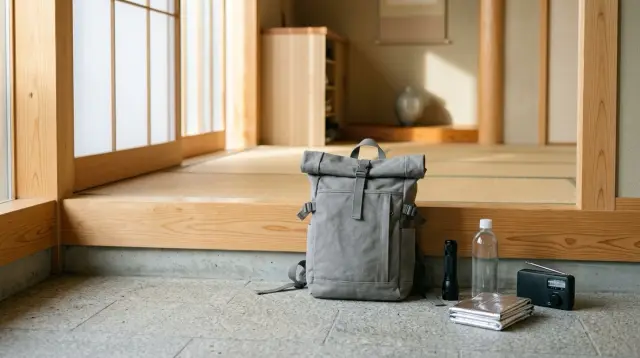
次に、懐中電灯、けいたいラジオ、予備の電池、モバイルバッテリーが必要です。停電になると、夜は本当に真っ暗になります。
Next you need a flashlight, a portable radio, spare batteries and a mobile battery. When the power goes out, nights are truly pitch dark.
毎日飲んでいる薬、マスク、手をふくウェットティッシュ、かんいトイレも忘れないでください。トイレの問題は、実際にはとても大変です。
Do not forget medicines you take daily, masks, wet wipes for your hands and portable toilets. The toilet problem is really hard in practice.
お金は、こぜにも入れておきます。停電のときは、カードが使えない店や、自動販売機が動かない場所が出てくるからです。
Include small change too, because during a blackout some shops cannot accept cards and vending machines will not work.
パスポートや在留カードのコピーと、家族の連絡先を書いた紙は、防水の袋に入れておくようにしましょう。
Copies of your passport and residence card and a paper with family contacts should be kept in a waterproof bag.
Home stockpile and checking
国は、水と食料を、最低でも三日分、できれば一週間分用意することをすすめています。水は、一人一日三リットルが目安です。
The government recommends preparing water and food for at least three days, or ideally a week. A guide for water is three liters per person per day.
普段食べている物を、少し多めに買って、古いものから食べて、食べた分を買い足す方法が続けやすいです。
An easy method to keep up is to buy a bit more of what you normally eat, eat the oldest first and replace what you used.
家具は、倒れないようにかべに固定し、ベッドの近くに背の高い物を置かないことも大切です。
Fix furniture to the wall so it does not fall, and do not put tall objects near your bed.
半年に一回、たとえば三月と九月など、日を決めて、中身と期限を確かめるようにしています。
Twice a year, for example in March and September, I set a day to check the contents and the expiry dates.
家の近くの避難所と、そこまでの道を、一度実際に歩いてみてください。ハザードマップで、水や土の危険がある場所も確認できます。
Walk at least once to the evacuation site near your home and along the route. A hazard map also shows places at risk of flooding or landslides.
Items that depend on the person
赤ちゃんがいる家は、ミルクやおむつ、小さな子の好きなおかしも必要です。食事の味が変わると、食べられなくなる子もいます。
Homes with babies also need formula, diapers and snacks the child likes. Some children cannot eat when the taste of meals changes.
一人暮らしの人は、近くの友達や、同じ国の人の連絡先をスマホに入れて、お互いの無事を確かめる約束をしておくと安心です。
If you live alone, save the contacts of nearby friends or people from your country and agree to check on each other's safety.
私は、引っ越してすぐの頃、防災バッグを作らないまま半年が過ぎてしまいました。「あとでやろう」と思っているうちに、忘れてしまうものです。
Soon after moving, half a year passed without my making an emergency bag. While thinking "I'll do it later", you simply forget.
そこで、休みの日に、スーパーで一度に必要な物を買ってきて、一時間で全部そろえることにしました。
So on a day off I bought everything I needed at the supermarket in one trip and decided to get it all together within an hour.
袋は、玄関の近くに置いておくと、すぐに持って出られます。重すぎると走れないので、背負える重さにすることが大切です。
Keeping the bag near the front door lets you take it at once. If it is too heavy you cannot run, so it must be a weight you can carry on your back.
避難の合図や、避難所の場所は、市役所のホームページに、やさしい日本語や英語で書かれていることもあります。
Evacuation signals and shelter locations are sometimes written in plain Japanese or English on the city hall website.
Words in this article
用意は完全でなくても構いません。まず水を一箱買うことから始めれば、それが家族を守る最初の一歩になります。
Preparation does not have to be perfect. Starting by buying one case of water is already the first step toward protecting your family.