

Hunting without hunting anything
秋になると、日本では「紅葉狩り」に出かける人が増えます。
When autumn comes, more people in Japan go out for “momijigari.”
「狩り」は、もともと動物をとることですが、紅葉狩りでは何もとりません。きれいな紅葉を見に行くことです。
“Kari” originally means catching animals, but in momijigari nothing is caught. It simply means going to see beautiful autumn leaves.
同じように、いちごを摘む「いちご狩り」や、海で貝を集める「潮干狩り」にも「狩り」がつきます。
In the same way, “ichigo-gari” (strawberry picking) and “shiohigari” (gathering shellfish at low tide) also carry “gari.”
Red leaves travel from north to south
紅葉が始まる時期は、北の地方や高い山のほうが早く、だんだん南へ広がっていきます。
Autumn colour starts earlier in the north and on high mountains, then gradually spreads south.
春の「桜前線」と同じように、秋には「紅葉前線」という言葉もあります。
Just like spring’s “sakura front,” autumn has a word too: the “kouyou front,” the advance of autumn colour.
紅葉が一番きれいな時期を「見頃」と言います。「今週末が見頃です」のように使います。
The time when the leaves look their best is called “migoro.” You use it like “this weekend is the peak time.”
How people enjoy it
公園やお寺で紅葉を見ながら、お弁当を食べる人もいます。
Some people eat a bento lunch while looking at the red leaves in a park or temple.
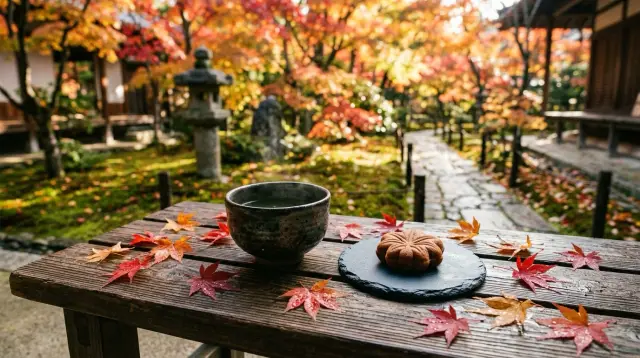
広島の宮島では、もみじの形をしたお菓子「もみじ饅頭」が有名です。あんこが入っているものが定番ですが、クリームなどいろいろな味もあります。
On Miyajima in Hiroshima, “momiji manju,” cakes shaped like maple leaves, are famous. Red bean filling is the classic, but there are many other flavours such as cream.
一つの場所で見頃が続くのは、たいてい一週間から二週間ほどです。だから、天気や情報を見て計画を立てます。
In any one place the peak usually lasts only about one to two weeks, so people check the weather and updates to make plans.
今年の秋は、近くの公園でも「小さな紅葉狩り」をしてみませんか。
This autumn, why not try a “small momijigari” at a park near you?