

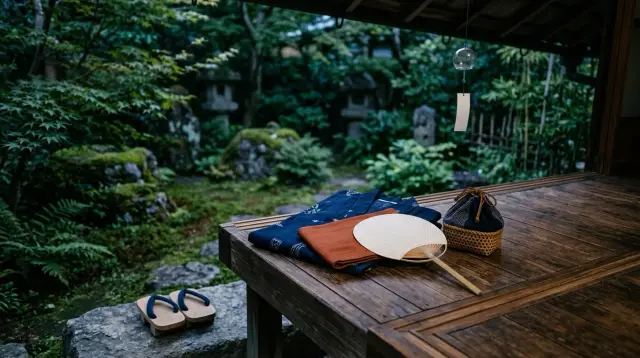
A summer night
日本のなつは、あついです。でも、たのしいこともたくさんあります。
Summers in Japan are hot, but there are many fun things too.
なつのよるに、「はなびたいかい」があります。
On summer nights there are 「花火大会」 (fireworks festivals).
七月や八月に、日本のいろいろなまちでやります。
They take place in many towns across Japan in July and August.
川やうみのちかくで、大きいはなびを見ます。
People watch big fireworks near a river or the sea.
はなびは、よるの七時か八時ごろにはじまるところがおおいです。
In many places the fireworks start around seven or eight in the evening.
Yukata and preparations
ゆかたをきて行く人も、たくさんいます。
Many people go wearing a yukata.
ゆかたは、なつにきる、うすいきものです。
A yukata is a thin kimono worn in summer.
友だちやかぞくと、いっしょに行きます。
People go together with friends and family.
シートや、のみものや、うちわをもっていきます。
They take a sheet, drinks, and a paper fan.
あさから、シートをしいて、ばしょをとる人もいます。
Some people lay down a sheet from the morning to reserve a spot.
ちかくには、やたいがならんでいます。かきごおりや、やきそばをうっています。
Food stalls line the area nearby, selling shaved ice and fried noodles.
こどもたちは、はなびのおとを聞いて、大きいこえでよろこびます。
The children hear the fireworks and cheer loudly.
はなびたいかいの日は、雨がふると、ちゅうしになることもあります。
If it rains on the day, the festival is sometimes cancelled.
The way home
はなびがおわると、たくさんの人が、いっしょにかえります。
When the fireworks end, many people go home at the same time.
駅がとてもこみますから、ゆっくりかえりましょう。
The station is very crowded, so let's go home slowly.
電車にのる前に、すこしまつことがおおいです。
You often have to wait a while before getting on a train.
ごみは、もってかえるか、ごみばこに入れます。
Take your trash home or put it in a bin.
大きいおととひかりを、みんなで見るはなびは、なつのいいおもい出になります。
Fireworks watched together, with big sounds and light, become a good summer memory.