

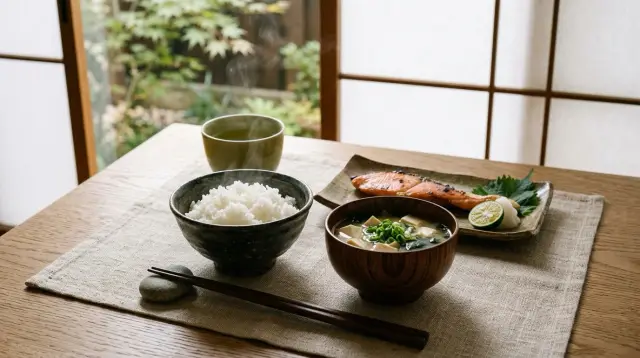
Before eating
日本では、しょくじの前に、「いただきます」と言います。
In Japan, people say 「いただきます」 before a meal.
てをあわせて、すこしあたまを下げる人もいます。
Some people put their hands together and bow their head a little.
「いただきます」は、もともと「もらいます」といういみの、ていねいなことばです。
「いただきます」 originally means "I receive," in a polite way.
でも、このことばには、もっと大きいきもちがあります。
But this phrase carries a bigger feeling.
食べものをつくった人や、やさいやさかなに、「ありがとう」と言うきもちです。
It is a feeling of thanks to the person who cooked and to the vegetables and fish.
ひとりで食べるときも、「いただきます」と言います。
You say 「いただきます」 even when you eat alone.
After eating
食べおわったら、「ごちそうさまでした」と言います。
When you finish eating, you say 「ごちそうさまでした」.
「ごちそうさま」は、「ありがとう。おいしかったです」というきもちです。
「ごちそうさま」 means "thank you, it was delicious."
いえでも、レストランでも、みんなおなじように言います。
At home or in a restaurant, everyone says it the same way.
お店を出るとき、お店の人に「ごちそうさまでした」と言う人もおおいです。
Many people say 「ごちそうさまでした」 to the staff when they leave the shop.
Children learn it too
日本の学校では、きゅうしょくの前に、みんなで「いただきます」と言います。
In Japanese schools, everyone says 「いただきます」 together before school lunch.
こどもは、小さいときから、このことばをならいます。
Children learn this phrase from when they are small.
先生は、「ごはんをのこさないで食べましょう」と言います。
The teacher says, "Let's eat without leaving any rice."
Words in this article
「いただきます」と言ってから、はしをもってください。小さいことばですが、日本のしょくじの大切なきもちです。みなさんも、あしたのあさごはんから、言ってみましょう。
Please say 「いただきます」 and then pick up your chopsticks. It is a small phrase, but an important feeling in Japanese meals. Try saying it starting with tomorrow's breakfast.