

Which door to board
日本のバスは、町によって乗り方が少しちがいます。
Bus riding differs slightly from town to town in Japan.
大きな町では、前のドアから乗って、乗る時にお金を払う所が多いです。
In big cities, many buses are boarded at the front door and paid for when you get on.
ほかの町では、後ろのドアから乗って、降りる時に払います。
In other towns you board at the back door and pay when you get off.
どちらか分からない時は、ドアの上や横の字を見ましょう。
When you cannot tell which it is, look at the signs above or beside the door.
後ろから乗る時は、入口の機械から「整理券」という小さい紙をとります。
When you board at the back, you take a small slip called a “seiriken” from the machine at the entrance.
その番号は、どこで乗ったかを表しています。
The number shows where you got on.
How to pay
前に大きな表があって、番号ごとの料金が出ています。
At the front there is a big board that shows the fare for each number.
降りる時に、自分の番号の下の料金を見て、整理券とお金をはこに入れます。
When you get off, check the fare under your number and put the slip and the money in the box.
ICカードを持っていれば、乗る時と降りる時に、機械にタッチするだけです。
If you have an IC card, you just touch the reader when boarding and getting off.
げんきんで払うなら、おつりが出ないバスが多いので、こぜにを用意しておきましょう。
If you pay in cash, many buses give no change, so have coins ready.
千円さつしかない時は、運転手の横の機械でりょうがえができます。
If you only have a 1,000-yen bill, you can change it at the machine next to the driver.
ただし、大きいお金はりょうがえできないので、気をつけてください。
However, large bills cannot be changed, so please be careful.
When getting off
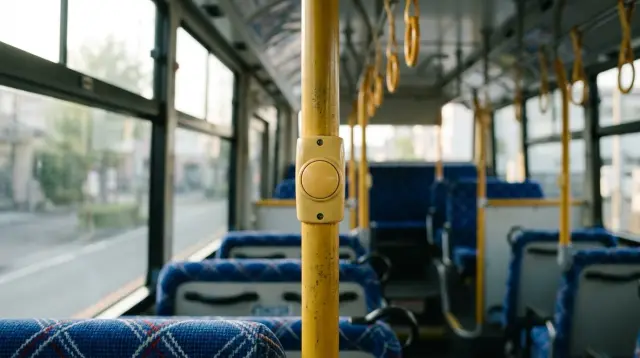
降りたいていりゅうじょの名前が聞こえたら、ボタンをおします。
When you hear the name of your stop, press the button.
ボタンをおすと、「つぎ、止まります」というお知らせが出ます。
After you press it, a notice appears saying “The next stop has been requested.”
バスが止まるまで、せきを立たないでください。走っている間は、とてもあぶないです。
Please do not leave your seat until the bus stops. It is very dangerous while it is moving.
車の中では、おとしよりや、体のふじゆうな人に、せきをゆずる人が多いです。
On the bus, many people give up their seats to older people and people with disabilities.
降りる時に、運転手に「ありがとうございました」と言う人もいます。
Some people also say “Thank you very much” to the driver as they leave.
バスは、時間どおりに来ないことがあります。道がこんでいると、五分ぐらいおくれることもあります。
Buses sometimes do not arrive on time. When the road is crowded, they can be about five minutes late.
バスていには、じこくひょうがあるので、乗る前に見ておくと安心です。
There is a timetable at the stop, so checking it before you ride gives peace of mind.
スマホのアプリで、バスが今どこにいるかしらべられる町もあります。
In some towns you can check where the bus is right now with a phone app.
しゃないでは、電話をしないで、しずかにするのがマナーです。
Inside the bus, the manners are not to talk on the phone and to stay quiet.
大きいかばんは、前に持って、ほかの人のじゃまにならないようにします。
Hold large bags in front of you so that you do not get in other people's way.