

Choosing a ticket and a seat
新幹線は、東京から大阪まで、速い列車で二時間半ほどで行ける、とても便利な乗り物です。
The Shinkansen is a very convenient way to travel; the fast trains go from Tokyo to Osaka in about two and a half hours.
座席には、「指定席」と「自由席」があり、指定席は席が決まっているので、座れないという心配がありません。
Seats are either "reserved" or "non-reserved"; with reserved seats you have an assigned place, so you need not worry about standing.
自由席は少し安いですが、連休や年末年始は、立ったまま乗ることもあるほど込みます。
Non-reserved seats are a little cheaper, but during long holidays and New Year they get so crowded that you may have to stand the whole way.
窓口や券売機のほか、インターネットで予約することもできます。
Besides ticket counters and machines, you can also reserve online.
切符は、乗車券と特急券の二枚で一組です。自動改札には二枚を同時に入れるのが決まりです。
A ticket is a pair: a boarding ticket and an express ticket, and the rule is to insert both into the automatic gate together.
窓側の席から、天気のいい日には富士山が見えるので、東京から西へ行くときは右側がおすすめだと言われています。
From a window seat you can see Mt. Fuji on clear days, so the right side is said to be recommended when heading west from Tokyo.
Enjoying an ekiben
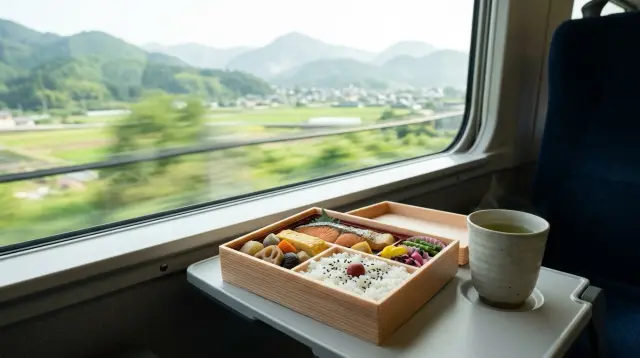
駅弁は、駅や列車の中で売られているお弁当で、その土地の名物がたくさん入っています。
An ekiben is a boxed lunch sold at stations and on trains, and it is packed with specialties of the region.
例えば、海の近くでは魚や貝、山の近くでは肉やきのこを使った弁当が人気です。
Near the sea, lunches with fish and shellfish are popular; near the mountains, ones with meat and mushrooms are.
中には、ひもを引くと自分で温まる弁当や、きれいな器に入った弁当もあって、見ているだけで楽しくなります。
Some warm themselves when you pull a string, and others come in lovely containers, so just looking at them is fun.
乗る前に、乗り換えの駅で買うのも人気です。乗り換えのついでに、その駅にしかない弁当を探してみましょう。
Buying at a transfer station is popular too; while changing trains, try looking for a lunch you can find only at that station.
ただし、においの強い食べ物は、ほかの乗客に迷惑になることがあるので、気をつけるようにしています。
However, strong-smelling food can bother other passengers, so I make a point of being careful.
Manners on board
新幹線の中は、とても静かです。大きな声で話す人は、ほとんどいません。
It is very quiet inside a Shinkansen. Almost nobody talks loudly.
電話がかかってきたら、席で話さずに、デッキと呼ばれる、車両と車両の間の場所に行くことになっています。
When a call comes in, you are supposed to go not to speak at your seat but to the "deck", the space between cars.
大きなスーツケースは、決まった場所に置かなければならない路線もあります。予約のときに、荷物の大きさを確かめておくと安心です。
On some lines, large suitcases must be kept in a designated place. It is safer to check the size when you reserve.
いすを後ろに倒すときは、後ろの人に「倒してもいいですか」と一言声をかけるのが、親切な習慣です。
When reclining your seat, it is a kind habit to ask the person behind, "May I recline?"
降りる駅が近づいたら、早めに荷物をまとめるようにしましょう。止まる時間は、とても短いからです。
When your stop is near, get your luggage together early, because the train stops for only a very short time.
時刻表を見ると、「のぞみ」「ひかり」「こだま」など、列車の名前によって止まる駅が違います。
In the timetable, the stations where a train stops differ depending on its name, such as "Nozomi", "Hikari" or "Kodama".
急いでいるときは速い列車がいいのですが、時間によゆうがあるなら、ゆっくり走る列車に乗るのも悪くありません。
When in a hurry a fast train is best, but if you have time to spare, a slower train is not bad either.
日本に住んでいる人の中には、新幹線に乗るたびに、窓の景色を見て、季節の変わり目を感じる人もいます。
Some people living in Japan look out the window each time they ride the Shinkansen and feel the change of seasons.
Words in this article
日本の鉄道は、時間を守ることを大切にしています。利用する人も、少しの気づかいで、旅をもっと気持ちよくできます。
Japanese railways take punctuality seriously. Passengers, too, can make the trip more pleasant with a little consideration.