

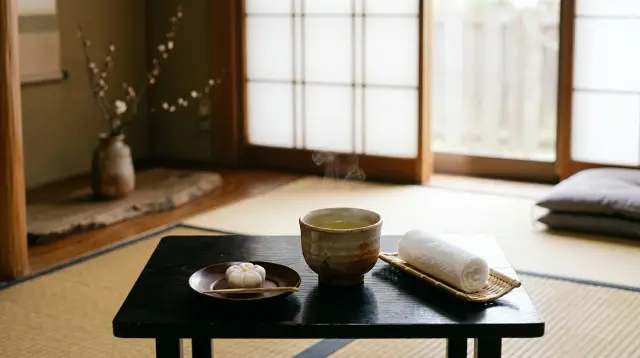
What "omotenashi" means
「おもてなし」は、お客さんを心から大切にして、もてなすことを表す日本語です。
"Omotenashi" is a Japanese word for welcoming guests warmly and treating them as truly important.
外国の「サービス」とよくくらべられますが、大きな違いは、お客さんが頼む前に、相手の気持ちを考えて動くところです。
It is often compared with foreign "service", but the big difference is that staff think of the guest's feelings and act before being asked.
また、お返しを期待しないことも大切だと言われています。チップがなくても、同じ気持ちで働く人が多いのです。
It is also said that not expecting anything in return matters. Even without tips, many people work with the same attitude.
この考え方は、お茶の世界の「一期一会」、つまり「この出会いは一生に一度」という気持ちから来ています。
This idea comes from "ichigo ichie" in the tea ceremony, the feeling that "this meeting happens only once in a lifetime."
Where you can see it in small moments
旅館や飲食店に入ると、冬は温かいおしぼり、夏は冷たいお水が出てくることが多いです。
When you enter a ryokan or restaurant, a warm towel in winter and cold water in summer are often brought out.
デパートでは、店員さんが商品をつつむとき、紙の折り方までていねいに気を配ります。
At department stores, when staff wrap an item, they pay careful attention even to how the paper is folded.
雨の日には、かさを入れるふくろが入り口に置いてあって、ゆかがぬれないようにしてあります。
On rainy days, bags for umbrellas are placed at the entrance so that the floor does not get wet.
駅の改札口で、お客さんが迷っているのを見つけると、駅員さんがすぐに声をかけてくれる場面もあります。
There are also scenes where a station worker notices a lost passenger at the ticket gate and speaks up right away.
見送りの習慣も有名で、店の人が、お客さんの姿が見えなくなるまで頭を下げることもあります。
The custom of seeing guests off is famous too; staff sometimes keep bowing until the guest is out of sight.
Good sides and hard sides
おもてなしのおかげで、日本は安心して旅ができる国だと言われています。
Thanks to omotenashi, Japan is said to be a country where you can travel with peace of mind.
一方で、働く人にとっては、お客さんの期待が高すぎて、疲れてしまうという問題もあります。
On the other hand, for the people working there, expectations from customers can be so high that it exhausts them.
最近は、「お客さんは神様」という考え方を見直して、無理な要求をするお客さんに断る店も増えてきました。
Recently, more shops are reconsidering the idea that "the customer is a god" and refusing customers who make unreasonable demands.
本当のおもてなしは、店とお客さんの両方が、お互いを大切にして初めて成り立つのかもしれません。
Perhaps true omotenashi only comes about when both the shop and the customer value each other.
What guests can do
列に並ぶ、静かに話す、ごみを持ち帰るなど、基本的なマナーを守ることが、一番の協力になります。
Queuing, speaking quietly and taking your trash home — following basic manners is the best way to cooperate.
店を出るときに、「ごちそうさまでした」「ありがとう」と言うだけでも、働く人は報われた気持ちになります。
Just saying "Gochisousama" or "Thank you" as you leave makes the staff feel appreciated.
営業時間が終わりそうなときは、早めに用事を済ませるのも、小さな思いやりです。
When closing time is near, finishing your errands early is also a small act of consideration.
私がおどろいたのは、小さな店でも、お客さんの顔を覚えて、「いつもありがとうございます」と声をかけてくれることです。
What surprised me is that even small shops remember customers' faces and say, "Thank you, as always."
大きな会社だけでなく、町の花屋さんや八百屋さんにも、同じ心を感じることができます。
You can feel the same spirit not only at big companies but also at the local flower shop or greengrocer.
ただし、これを「日本人の性格」だと決めつけるのは正しくありません。仕事として学び、くんれんした結果でもあります。
However, it is not right to assume it is simply "the Japanese personality"; it is also the result of learning and training as part of the job.
日本人の友達に聞くと、「特別なことをしているつもりはない」と答える人が多いです。当たり前のこととして、毎日続けているのだそうです。
When you ask Japanese friends, many answer, "I don't think I'm doing anything special." They apparently keep it up every day as a matter of course.
Words in this article
おもてなしは、特別な技術ではなく、相手を思う気持ちを、小さな行動にして見せることなのです。
Omotenashi is not a special technique; it is showing consideration for others through small actions.