

What Obon is
お盆は、亡くなった家族や先祖のたましいが、一年に一度、家に帰ってくると考えられている時期です。
Obon is a period when the spirits of deceased family members and ancestors are believed to return home once a year.
日にちは地域によって違いますが、多くの場所で八月十三日から十六日ごろに行われます。
The dates differ by region, but in many places it is held from around August 13 to 16.
七月に行う地域もあるので、「お盆はいつですか」と、住んでいる場所の人に聞いてみるのがいいです。
Some regions hold it in July, so it is wise to ask people where you live, "When is Obon?"
お盆は祝日ではありませんが、会社や工場が休みになることが多く、夏休みの中心になっています。
Obon is not a public holiday, but companies and factories often close, making it the heart of summer vacation.
What families do at home
帰省した家族は、まず仏壇をきれいにして、果物やおかし、花を供えます。
Family members who return home first clean the household altar and offer fruit, sweets and flowers.
十三日の夕方には、「迎え火」をたいて、祖先の霊が迷わずに帰れるようにします。
On the evening of the 13th they light a "welcoming fire" so the ancestors' spirits can come home without getting lost.
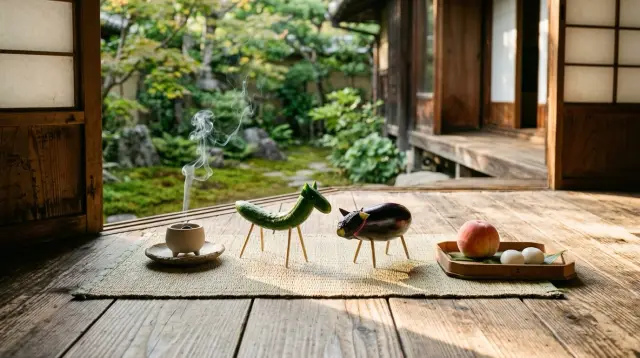
野菜で作った、きゅうりの馬となすの牛をかざる家もあります。「馬は早く来て、牛はゆっくり帰ってほしい」という意味があるそうです。
Some homes display a cucumber horse and an eggplant cow made of vegetables. They are said to mean "come quickly on the horse, go back slowly on the cow."
家族でお墓参りに行き、墓をそうじして、線香をあげます。墓の前で、一年の出来事を報告する人もいます。
Families visit graves, clean them and offer incense. Some report the year's events in front of the grave.
十六日には「送り火」をたいて、たましいを見送ります。京都の大文字の送り火は、特に有名です。
On the 16th a "farewell fire" is lit to see the spirits off. The Daimonji farewell fire in Kyoto is especially famous.
Bon-odori and the return-home rush
夏の夜、公園やお寺の庭で、輪になっておどる「盆踊り」が開かれます。ゆかたを着た人も多いです。
On summer nights, "bon-odori" circle dances are held in parks and temple grounds. Many people wear a yukata.
動きはあまり難しくないので、外国人でも、まわりの人をまねすれば、すぐに踊れるようになります。やぐらを囲むたいこの音も楽しめます。
The moves are not very hard, so even foreigners can soon dance by copying the people around them. You can also enjoy the sound of drums around the tower.
この時期、新幹線や高速道路は、帰省する人でとても混みます。ふだん離れて暮らしている家族が、集まる大切な機会だからです。
During this time the Shinkansen and expressways are very crowded with people going home, because it is an important chance for families who usually live apart to gather.
切符や宿の値段も高くなるので、旅行したい人は、早めに予約したほうがいいです。
Ticket and lodging prices also rise, so those who want to travel should book early.
一方で、東京のような大きな都市は、人が減って、道も電車も、いつもより静かになります。
On the other hand, in big cities like Tokyo, people leave and the streets and trains become quieter than usual.
How foreign residents can spend it
お盆の間は、役所や病院、小さな店が休みのところもあります。必要な手続きは、休みの前に済ませておきましょう。
Some government offices, hospitals and small shops close during Obon. Finish any necessary procedures before the break.
日本人の友達の実家に招かれることもあります。そのときは、おかしなどを手土産に持って行くと、喜ばれます。
You may be invited to a Japanese friend's family home. Bringing sweets as a small gift will be appreciated.
地元の盆踊りに参加すれば、近所の人と知り合えるチャンスにもなります。夏の思い出に、ぜひ行ってみてください。
Joining a local bon-odori is also a chance to meet your neighbors. Do go and try it for a summer memory.
私の日本人の友達は、毎年お盆になると、電車で四時間かけて、田舎のおばあさんの家に帰ります。
A Japanese friend of mine goes home every Obon, taking four hours by train to her grandmother's house in the countryside.
親戚が集まって、一緒にご飯を食べ、子どもの頃の話をするのが、一年で一番の楽しみだそうです。
She says the biggest joy of the year is relatives gathering, eating together and talking about childhood.
家によって、お盆の過ごし方や飾りは、少しずつ違います。決まりを一つだけ覚えるより、家族の気持ちを知ろうとすることが大切です。
How Obon is spent and decorated differs slightly by family. Trying to understand the family's feelings matters more than memorizing a single rule.
お盆の時期には、お寺でお経を上げてもらうことになっている家も多いです。ただし、すべての日本人が宗教を信じているわけではなく、習慣として行っている人も少なくありません。
Many families are expected to have a temple priest chant sutras during Obon. However, not every Japanese person is religious, and quite a few do it simply as a custom.
Words in this article
お盆は、亡くなった人を思い出しながら、家族がお互いを大切にする時間です。日本の夏を知るために、ぜひ体験してみてください。
Obon is a time when families cherish one another while remembering those who have passed. Do experience it to understand a Japanese summer.