

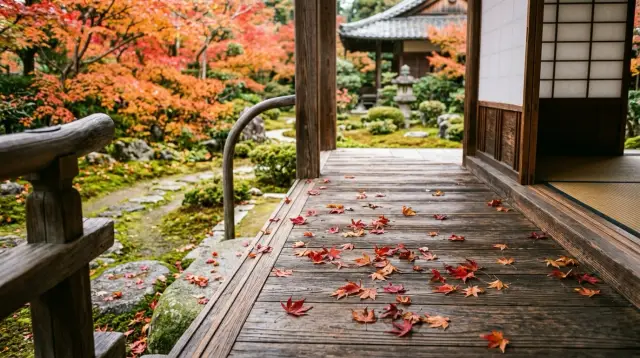
What momiji-gari is
秋になると、木の葉が赤や黄色に変わります。日本では、その美しさを見に出かけることを「紅葉狩り」と言います。
In autumn, tree leaves turn red and yellow. In Japan, going out to see this beauty is called "momiji-gari".
春の花見ほどお酒を飲んで騒ぐ人は少なく、どちらかと言うと、静かに歩きながら景色を楽しむ人が多いです。
Fewer people drink and make merry than at spring flower viewing; most quietly walk and enjoy the scenery.
昔の人も紅葉を愛していて、古い和歌や絵にも、よく出てきます。日本の秋の文化に欠かせないものです。
People of old loved autumn leaves too, and they often appear in old waka poems and paintings. They are indispensable to Japan's autumn culture.
When and where to go
紅葉は、北から南へ、また、高い山から低い町へと、少しずつ進みます。北海道では九月の終わりごろから、東京や京都では十一月の終わりごろが見ごろになります。
Autumn color moves gradually from north to south and from high mountains to low towns. It peaks around the end of September in Hokkaido and around late November in Tokyo and Kyoto.
天気予報のサイトやアプリには、「紅葉前線」という情報が出ます。どの場所がいつごろ見ごろか、一週間ごとに分かります。
Weather sites and apps publish "foliage front" information, showing which places peak when, week by week.
有名な場所としては、京都のおてらや、日光、箱根、長野の山などがあります。東京の中にも、公園や神社で楽しめる場所がたくさんあります。
Famous places include temples in Kyoto, Nikko, Hakone and the mountains of Nagano. Even in Tokyo there are many parks and shrines where you can enjoy it.
夜に、木に光を当てる「ライトアップ」を行う場所もあります。昼とは違う、幻想的な景色が見られます。
Some places hold "light-ups" that illuminate trees at night. You can see a dreamlike scene different from the daytime.
見ごろは、わずか一週間ほどです。雨や風で、予想より早く散ってしまうこともあるので、予定に余裕を持ちましょう。
The best period is only about a week. Rain or wind can make leaves fall earlier than expected, so leave room in your schedule.
Enjoying it, and manners
有名な場所は、週末に人が多くて、道が進まないほど混みます。できれば平日の朝早くに行くのがおすすめです。
Famous places are so crowded on weekends that you can hardly move. If possible, going early on a weekday morning is recommended.
写真を撮るときは、後ろに並んでいる人を待たせすぎないようにします。三脚の使用が禁止されている所も少なくありません。
When taking photos, do not keep the people lined up behind you waiting too long. Many places prohibit tripods.
木の枝を折ったり、きれいな葉を持ち帰ったりするのはいけません。おてらや神社の中では、静かに歩きましょう。
Do not break branches or take beautiful leaves home. Walk quietly inside temples and shrines.
山に登る場合は、秋でも朝と夕方は寒いので、暖かい上着と、歩きやすい靴を用意してください。
If climbing a mountain, mornings and evenings are cold even in autumn, so prepare warm outerwear and comfortable shoes.
秋は、食べ物もおいしいきせつです。「もみじまんじゅう」や、栗、さつまいもを使ったおかしは、この時期ならではの味です。
Autumn is also a season of tasty food. "Momiji manju" and sweets made with chestnuts or sweet potatoes are flavors unique to this time.
私が初めて京都で紅葉を見たのは、十一月の中ごろでした。まだ緑の葉も残っていて、赤と緑が混ざった景色がとてもきれいでした。
The first time I saw autumn leaves in Kyoto was in the middle of November. Some green leaves remained, and the scene of red mixed with green was beautiful.
同じ木でも、日の当たる場所によって、色が少しずつ変わっていきます。近くで葉を一枚ずつ見ると、その違いがよく分かります。
Even on the same tree, the color changes little by little depending on where the sun hits. Looking at leaves one by one up close shows the difference well.
紅葉の名所では、入場料が必要なお寺や庭園もあります。現金しか使えない場合もあるので、少し持っていくと安心です。
At famous foliage spots, some temples and gardens charge an admission fee. Some accept only cash, so carrying a little is reassuring.
帰りの電車は、駅が混んで入場制限をすることもあります。ゆっくり歩いて、時間をずらして帰るのも一つの方法です。
On the way home, stations can get so crowded that entry is restricted. Walking slowly and going home at a different time is one option.
家の近くの並木道や公園にも、小さな紅葉があります。遠くへ行けなくても、毎日の道で季節を感じられます。
There are small autumn leaves on tree-lined streets and parks near home too. Even if you cannot go far, you can feel the season on your daily route.
紅葉の季節になると、道を歩くたびに、落ち葉を踏む音が聞こえるようになります。その音も、秋の楽しみの一つです。
In the autumn-leaf season, every time you walk along a road you start to hear the sound of stepping on fallen leaves. That sound is also one of autumn's pleasures.
Words in this article
紅葉は、同じ場所でも、年によって、色の濃さが違います。自分だけの「今年の秋」を探しに、出かけてみませんか。
Even at the same place, the depth of color differs from year to year. Why not go out and look for your own "this year's autumn"?