

The fun of weekend markets
日本の町や田舎では、週末の朝に、農家の人たちが野菜や果物を売る市が開かれます。
In Japanese towns and countryside, markets are held on weekend mornings where farmers sell vegetables and fruit.
朝に収穫したばかりの野菜は、スーパーより新鮮で、値段も安いことが多いです。形が少し悪くても、味は変わりません。
Vegetables just harvested that morning are fresher than at supermarkets and often cheaper. Even if the shape is a little off, the taste is the same.
生産者と直接話せるのも魅力です。「この野菜はどう食べたらおいしいですか」と聞くと、親切に教えてくれます。
Being able to talk directly with producers is also an attraction. If you ask, "How should I eat this vegetable?" they will kindly tell you.
道の駅は、高速道路や国道の近くにある休憩所で、地元の野菜や特産品を売る店が入っていることが多いです。
A "michi no eki" is a rest stop near expressways and national roads, and often has shops selling local vegetables and specialties.
旅行のついでに寄ると、その土地ならではの味や、お土産に出会えます。
If you stop by on a trip, you can find flavors and souvenirs unique to the place.
How to use a mujin hanbaijo
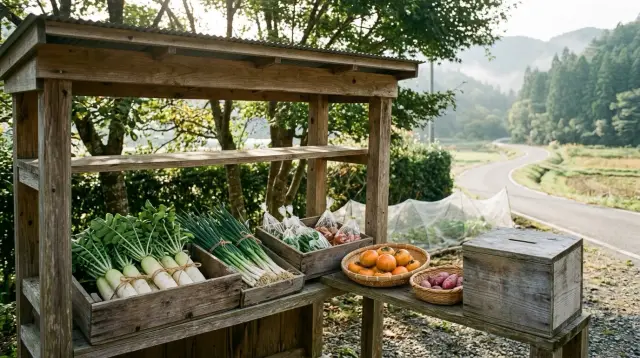
田舎の道を歩いたり、車で走ったりしていると、家の前に、小さな小屋や棚が置かれていることがあります。
Walking or driving along a country road, you sometimes see a small hut or shelf in front of a house.
これが「無人販売所」です。売る人はいなくて、野菜や果物に値段が書いてあり、そばに、お金を入れる箱があります。
This is a "mujin hanbaijo". There is no seller; the vegetables and fruit have prices written on them and a box for money sits nearby.
買いたいものを選んだら、値段の分のお金を箱に入れます。おつりは出ないので、百円玉や十円玉などの小銭を、前もって用意しておきましょう。
After choosing what you want, put the right amount into the box. Since no change is given, prepare coins like 100-yen and 10-yen pieces in advance.
ふくろが置いてあることもありますが、ないこともあるので、エコバッグを持って行くと便利です。
Bags are sometimes provided, but not always, so bringing your own eco bag is handy.
最近は、スマホのQR決済が使える無人販売所も、少しずつ出てきました。ただし、まだ現金だけの場所が多いです。
Recently, some stands accept smartphone QR payment, though many still take cash only.
A system built on trust
この仕組みは、「お金を入れずに持って行く人は、ほとんどいない」という信頼の上に成り立っています。
This system rests on the trust that almost nobody takes things without putting in money.
農家にとっては、人が店に立たなくても、余った野菜を売れるので、助かります。買う人にとっては、安く新鮮なものが手に入ります。
For farmers, it helps because they can sell surplus vegetables without staffing a stall. For buyers, they get cheap, fresh goods.
残念ながら、お金を払わずに持っていかれて、やめてしまった販売所もあるそうです。守るのは、買う人のマナーです。
Sadly, some stands reportedly closed after goods were taken without payment. Protecting them depends on buyers' manners.
写真を撮るときは、持ち主の家や、人の顔が写らないように、気をつけてください。駐車する場所にも、気をつけましょう。
When taking photos, take care not to capture the owner's house or any faces. Also be careful about where you park.
私は、友達の運転する車で、山の道を走っていたとき、初めて無人販売所を見つけました。ミカンが一袋、百円で並んでいて、思わず車を止めました。
When driving on a mountain road in a friend's car, I found a mujin hanbaijo for the first time. Mandarins were lined up at a hundred yen a bag, and I stopped the car without thinking.
季節によって並ぶ物が変わります。夏はトマトやきゅうり、秋は栗やさつまいも、冬は大根や白菜が多いです。
What is on sale changes with the season. Summer brings tomatoes and cucumbers, autumn chestnuts and sweet potatoes, winter daikon and napa cabbage.
売り切れてしまうことも多いので、欲しいものがあるときは、朝の早い時間に行くのがおすすめです。
Things often sell out, so if you want something, going early in the morning is recommended.
買った野菜は、土がついていることもあります。家に帰ったら、よく洗ってから使ってください。
Vegetables you buy may have soil on them. Wash them well at home before using.
東京のような大きな都市では、あまり見かけませんが、週末に少し郊外へ出かけると、ぐっと出会いやすくなります。
They are rarely seen in big cities like Tokyo, but a short trip to the suburbs on a weekend makes them much easier to find.
買い物のついでに、畑の様子を眺めるのも楽しいです。農家の人たちが毎日世話をしているおかげで、野菜が私たちの手元に届きます。
It is fun to look at the fields while you shop. Thanks to farmers caring for them every day, vegetables reach our hands.
Words in this article
お金と品物を、人を信じて交換する。小さな箱の中には、日本の田舎の暮らしと、助け合いの心が入っています。
Exchanging money and goods by trusting people — inside that small box are rural Japanese life and the spirit of mutual help.