

Gần ba phần mười dân số là người cao tuổi
日本は世界でもっとも高齢化が進んだ国の一つで、65歳以上の人が人口の三割近くを占めている。
Japan is one of the most rapidly aging countries in the world, with people aged 65 and over making up nearly thirty percent of the population.
この変化は、医療や介護だけでなく、毎日の買い物のあり方にも影響を及ぼしている。
This change affects not only medical care and nursing care but also the way people do their daily shopping.
都市部でも団地の高齢化が進み、かつて子どもであふれていた住宅地に、杖をついて歩く人の姿が目立つ町も珍しくなくなった。
Even in cities, housing complexes are aging, and it is no longer unusual to find neighborhoods once full of children where people walking with canes now stand out.
かつてコンビニの主な客は、仕事帰りの若い会社員や学生だった。
The main customers of convenience stores used to be young office workers and students on their way home.
弁当やおにぎりが売れ筋だった時代から、いまでは冷凍食品や日用品の売り場が広がり、店は小さなスーパーのような役目を持ち始めている。
From the days when lunch boxes and rice balls were the bestsellers, the frozen food and daily-necessities sections have grown, and the store is beginning to play the role of a small supermarket.
ところが近年は、近所に住む高齢の客が昼間に訪れる店が増え、品ぞろえも大きく変わってきた。
In recent years, however, more stores see elderly customers from the neighborhood visiting in the daytime, and the product lineup has changed greatly.
Sự thay đổi về hàng hoá và dịch vụ
一人暮らしの高齢者向けに、少量のおかずや、塩分を控えた弁当、やわらかく調理した食品が並ぶようになった。
For older people living alone, small portions of side dishes, lower-salt lunch boxes, and softly cooked foods now line the shelves.
重い米や水を持ち帰るのが大変な人のために、小さな容器に分けて売る商品や、持ち手のついた包装も工夫されている。
For people who find it hard to carry home heavy rice and water, products divided into small containers and packaging with handles have also been devised.
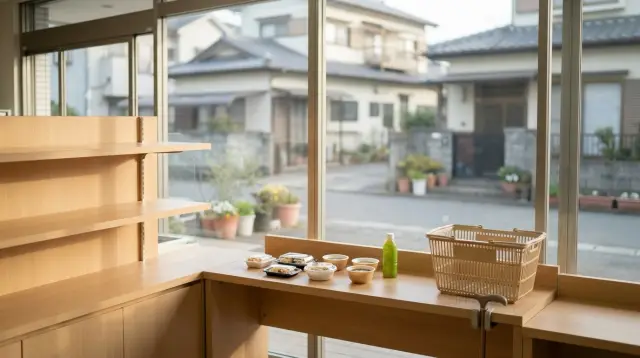
店の中には椅子を置き、買った物をそのまま食べたり、ひと休みしたりできる場所を設ける例も増えている。
More stores are placing chairs inside and setting up spaces where customers can eat what they bought on the spot or rest for a while.
大手チェーンの中には、自治体と協定を結び、客が倒れているのを見つけたら通報するなど、地域の安全に協力する店もある。
Some major chains sign agreements with municipalities and cooperate in local safety, for example by reporting it if they find a customer who has collapsed.
電話やアプリで注文を受け、自宅まで商品を届けるサービスを始める店もある。
Some stores have begun services that take orders by phone or app and deliver the goods to customers' homes.
近所にスーパーがなくなった地域では、トラックに商品を積んで集落を回る「移動販売」が、買い物に困る「買い物弱者」を支えている。
In areas where the neighborhood supermarket has disappeared, "mobile sales," in which trucks loaded with goods circle the settlements, support the so-called "shopping-vulnerable" residents.
山間の集落では、週に数回やって来る移動販売車が、商品を売るだけでなく、お年寄りが顔を合わせて世間話をする貴重な機会にもなっている。
In mountain hamlets, the mobile sales truck that comes a few times a week does more than sell goods; it is also a precious chance for older residents to meet and chat.
配達の際に、郵便局員や配達員が声をかけるのは、単なる接客にとどまらず、安否を確かめる「見守り」の役割も兼ねている。
When a postal worker or deliveryperson speaks to a resident during a delivery, it is more than customer service; it also serves as a "watch-over" check that the person is safe.
Cả quầy làm thủ tục hành chính
コンビニの端末では、マイナンバーカードを使えば、住民票や印鑑証明書などを受け取ることができる。。操作は画面の案内に従えば済み、手数料も窓口より安いことが多い
At terminals in convenience stores, you can use a My Number card to obtain documents such as a resident record or a seal registration certificate. The operation just follows on-screen guidance, and the fee is often cheaper than at the counter.
市役所の窓口が閉まっている夜間や休日でも手続きができるため、仕事で忙しい人にとっても便利だ。
Because procedures can be done at night and on holidays when the city hall counter is closed, it is also convenient for busy people.
銀行のATMや荷物の受け取り、公共料金の支払いなども一か所でできるので、足腰が弱った人ほど恩恵を感じやすい。
Since you can also use a bank ATM, pick up packages, and pay utility bills in one place, those with weaker legs tend to feel the benefit most.
外国人の住民にとっても、公共料金の払込票を持って店に行けば済むのは助かる点で、日本の暮らしの入口になっている面もある。
For foreign residents too, being able to simply take a utility payment slip to the store is a help, and in some ways the store has become an entry point to life in Japan.
Words in this article
Những vấn đề còn lại và điều chúng ta có thể làm
とはいえ、スマートフォンやセルフレジの操作に慣れていない高齢者にとっては、便利になったはずのサービスが壁になることもある。
Even so, for older people unused to operating smartphones or self-checkouts, services that should have become convenient can sometimes turn into a barrier.
そのため、店員が操作を手伝ったり、人が対応するレジを残したりして、誰も取り残さない工夫が求められている。
For that reason, efforts so that no one is left behind are called for, such as staff helping with the operation or keeping checkouts staffed by people.
人手不足の中で、見守りまで店に任せきりにするのには限界がある。。店員の負担が増えすぎれば、サービスそのものが続かなくなりかねない
Amid a labor shortage, there is a limit to leaving even the watching-over entirely to the stores. If the burden on staff grows too heavy, the service itself might not be sustainable.
一方で、深夜営業を見直し、夜は店を閉めて昼間の人手を厚くする店も現れており、「いつでも開いている」という前提も少しずつ揺らいでいる。
At the same time, some stores are reviewing late-night hours, closing at night and strengthening daytime staffing, and the assumption that stores are "always open" is slowly wavering.
地域の住民や行政、店が協力してこそ、高齢者が安心して暮らし続けられる町になる。
Only when local residents, the government, and stores cooperate can a town become one where older people can keep living with peace of mind.
日本のコンビニは、便利さを売る店から、暮らしを支える場所へと姿を変えつつある。。私たち一人ひとりも、その変化を支える側にいるのだ
Japan's convenience stores are gradually changing from shops that sell convenience into places that support people's lives. Each of us, too, is on the side supporting that change.