

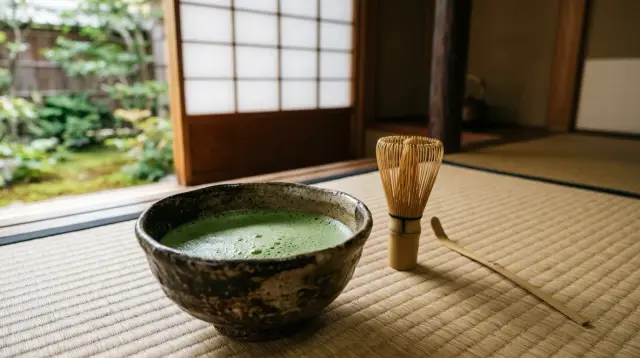
More than drinking tea
茶道と聞くと、正座して苦い抹茶を飲む堅苦しい儀式を思い浮かべる人が多い。だが、その本質は、客をもてなす心を形にした総合的な文化である。
Hearing "tea ceremony", many people picture a stiff ritual of sitting formally and drinking bitter matcha. Yet its essence is a comprehensive culture that gives form to the heart of welcoming a guest.
茶を点てる亭主は、茶室の設え、掛け軸や花の選び方、道具の取り合わせに至るまで、その日の客のことを思い描いて準備する。
The host who whisks the tea prepares with that day's guests in mind, from the arrangement of the tea room and the choice of scroll and flowers to the coordination of utensils.
客の側もまた、茶碗の景色を愛で、菓子の季節感に感心し、感謝を言葉と所作で返す。もてなす者と受ける者が呼吸を合わせる場なのである。
The guest in turn admires the bowl's scenery, appreciates the seasonality of the sweet, and returns thanks in words and gesture. It is a place where the one who hosts and the one who receives breathe in step.
茶の湯の心得として知られる「一期一会」は、今日の茶会は生涯に一度きりだと思って臨め、という教えを表す。幕末の大名・井伊直弼が説いたことで広く知られるようになった。
"Ichigo ichie", known as a precept of the tea ceremony, expresses the teaching to approach today's gathering as if it will come only once in a lifetime. It became widely known through its exposition by the late-Edo daimyo Ii Naosuke.
A short history
茶は中国から伝わり、鎌倉時代には僧の栄西が茶の効能を説いた書物を著したとされる。当初は薬として、また禅寺の修行の一環として飲まれていた。
Tea came over from China, and in the Kamakura period the monk Eisai is said to have written a book on its benefits. At first it was drunk as medicine and as part of training in Zen temples.
やがて武士や町人の間にも広まり、村田珠光、武野紹鷗を経て、千利休が簡素を極めた侘び茶を大成させた。
It spread among samurai and townspeople too, and through Murata Juko and Takeno Joo, Sen no Rikyu brought to completion wabi-cha, tea that carried simplicity to its extreme.
利休の死後、茶の湯は複数の流派に分かれながら受け継がれた。現在、表千家、裏千家、武者小路千家の「三千家」が、その代表的な流れとして知られる。
After Rikyu's death, the tea ceremony was handed down while splitting into several schools. Today the "three Sen families" of Omotesenke, Urasenke, and Mushanokojisenke are known as its representative lines.
利休が重んじたとされる「和敬清寂」の四文字は、互いを敬い、場を清め、静かな心で向き合うという茶道の精神を要約している。
The four characters "wa kei sei jaku", said to have been valued by Rikyu, sum up the spirit of tea: respect one another, keep the space pure, and face each other with a quiet heart.
利休の作ったと伝わる茶室「待庵」は、わずか二畳ほどの広さしかない。この極小の空間では、亭主と客の距離が近く、息遣いまで感じられる。
The tea room "Taian", handed down as Rikyu's work, is only about two tatami mats wide. In this tiny space, host and guest are so close that one can feel even the breathing.
利休七則として伝わる心得には、「花は野にあるように」「夏は涼しく冬は暖かに」などがある。どれも、相手の身になって考えるという当たり前のことを説いている。
The precepts handed down as Rikyu's seven rules include "arrange flowers as they are in the field" and "cool in summer, warm in winter". Each preaches the obvious: think from the other person's position.
How a gathering unfolds
客はまず茶室に入る前に露地を歩き、手や口を清めて心を整える。日常の喧騒から少しずつ離れていく、この道のりも茶会の一部である。
Before entering the tea room, guests walk along the garden path, cleanse their hands and mouth, and settle the mind. This path, which gradually leads away from everyday bustle, is part of the gathering too.
一般に、茶には濃茶と薄茶の二種類がある。正式な茶事では濃茶を客が一碗から回し飲みするが、気軽な茶会では、一人ずつに薄茶が出されることが多い。
Generally there are two kinds of tea: koicha (thick) and usucha (thin). In a formal chaji, guests pass and share a single bowl of koicha, while at casual gatherings usucha is often served to each person.
茶をいただく前には、まず菓子が出される。甘いものを先に口にしておくことで、抹茶の苦みと香りがより引き立つとされている。
Before the tea is received, a sweet is served first. Taking something sweet beforehand is said to bring out the bitterness and aroma of the matcha.
季節によって湯を沸かす道具も変わり、夏は持ち運びのできる風炉、冬は畳に切った炉を使う。十一月の炉開きは、茶人にとっての正月に当たるとも言われる。
The tool for boiling water also changes with the season: a portable furo in summer and a hearth cut into the tatami in winter. The opening of the hearth in November is even said to correspond to New Year for tea practitioners.
茶碗が手元に届いたら、軽く礼をして、多くの流派の作法にのっとって茶碗を回す。正面を避けて口をつけるのは、亭主が見せた茶碗の「顔」への敬意の表れだ。
When the bowl reaches your hands, you bow lightly and turn it according to the etiquette of many schools. Drinking while avoiding the front shows respect for the bowl's "face" that the host presented.
飲み終えたら、茶碗の縁を指で拭い、道具を拝見する。茶碗や茶杓の由来を尋ねることは、亭主の選んだ心遣いに応える礼儀とされる。
When finished, you wipe the rim with your fingers and inspect the utensils. Asking about the origin of the bowl or tea scoop is considered courtesy that answers the thoughtfulness the host chose.
こうした所作は、覚えること自体が目的ではない。理屈を超えた型の中で、相手への敬意が自然に身体から表れるようになることを目指しているのである。
Memorizing these gestures is not the goal in itself. The aim is that, within forms that go beyond reasoning, respect for the other person comes to show naturally from the body.
客として招かれる場合、懐紙や扇子、袱紗を持参するのが一般的だとされる。足袋や白い靴下が求められる席もあるので、事前に確認しておくと安心だ。
When invited as a guest, it is generally said to be customary to bring kaishi paper, a fan, and a fukusa cloth. Some gatherings ask for tabi or white socks, so checking beforehand is reassuring.
Experiencing tea today
現代では、正座が難しい人のために、椅子と机を用いる立礼式の茶席も一般的になっている。ホテルや観光施設でも、短時間で体験できる機会が増えた。
Today, for those who find sitting formally difficult, tea seating that uses chairs and a table, called ryurei style, has become common. Hotels and tourist facilities also offer more chances to experience it in a short time.
観光を兼ねて茶席に参加する外国人も多い。全ての作法を知らずとも、「お先に」と一言添えて、感謝の気持ちで臨めば、十分に歓迎される。
Many foreign visitors join tea gatherings as part of sightseeing. Even without knowing every manner, adding a word like "o-saki ni" and joining with gratitude will earn you a warm welcome.
一方、茶道を習う人の高齢化や、道具をそろえる費用の重さから、後継者をどう育てるかが課題として指摘されている。
On the other hand, the aging of those who study tea and the weight of the cost of assembling utensils have led to how to nurture successors being pointed out as a challenge.
大学や高校の茶道部で初めて茶筅を握る若者も少なくない。生活が忙しくなっても、季節の変わり目に茶室へ戻ってくる人がいるのは、その静けさが得難いからだろう。
Not a few young people pick up a tea whisk for the first time in a university or high school tea club. Even as life gets busier, some return to the tea room at each change of season, perhaps because that stillness is hard to find elsewhere.
Words in this article
近年は、抹茶が菓子や飲み物の素材として海外でも人気を集めている。その手軽な広がりが、茶の湯の背景に目を向けるきっかけになれば、という声もある。
In recent years matcha has also grown popular overseas as an ingredient for sweets and drinks. Some voices hope that this casual spread will become a chance to look at the background of the tea ceremony.
茶道は、一杯の茶をもって人と向き合う時間そのものを味わう文化だ。忙しい日常の中で、湯の沸く音に耳を澄ます数分を持つことは、それだけで一つの贅沢といえる。
The tea ceremony is a culture of savoring the very time of facing another through a single bowl of tea. In busy daily life, taking a few minutes to listen to the sound of water boiling is, by itself, a kind of luxury.