

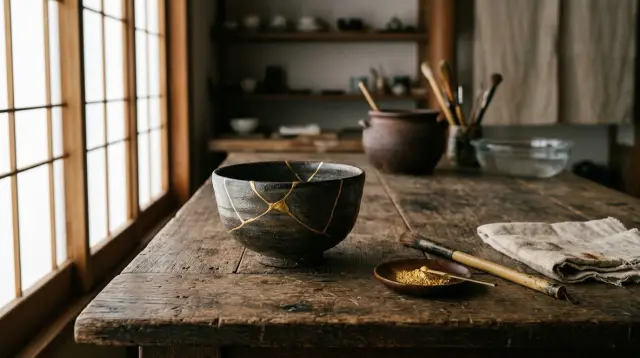
The crack is not hidden
大切にしていた茶碗を落として割ってしまった。そのとき、多くの人は捨てるか、できるだけ目立たないように直そうとするだろう。
You drop and break a bowl you cherished. Many people would throw it away or try to repair it so that the damage is as inconspicuous as possible.
ところが、日本には、割れ目をあえて金色に光らせる修理の技法がある。それが「金継ぎ」である。
In Japan, however, there is a repair technique that deliberately makes the fracture glow gold. It is called "kintsugi".
接着に使うのは、漆の木から採れる樹液を精製した天然の漆である。欠けた部分を漆で埋め、乾く前に金粉を蒔いて仕上げる。
The adhesive is natural lacquer refined from the sap of the lacquer tree. Chipped areas are filled with lacquer, and gold powder is scattered on before it dries to finish.
漆は一般の接着剤のように短時間で固まらず、湿り気を含んだ空気の中で少しずつ硬化する。そのため、工程を重ねるごとに待つ時間が生まれる。
Unlike ordinary adhesives, lacquer does not set quickly but hardens little by little in air that holds moisture. That is why every added step brings a waiting period.
Origins and anecdotes
金継ぎの起源については、はっきりしたことが分かっていない。室町時代の将軍が割れた茶碗を中国に送って修理させたという逸話がよく語られる。
Little is clearly known about the origin of kintsugi. A frequently told anecdote has a Muromachi-period shogun sending a broken tea bowl to China for repair.
戻ってきた茶碗には金属のかすがいが打たれており、その無骨さに不満を覚えた日本の職人が、より美しい直し方を工夫した、という筋書きである。
The bowl came back fastened with metal staples, and a Japanese craftsman, dissatisfied with its clumsiness, devised a more beautiful way of mending: such is the storyline.
ただし、これはあくまで伝承であり、史実として確かめられているわけではない。漆で器を補修する技術自体は、縄文時代の遺跡から出た土器にも見られるとされる。
However, this is merely tradition, not historically verified fact. The technique of repairing vessels with lacquer itself is said to be seen even in pottery from Jomon-period sites.
茶の湯が盛んになるにつれ、茶碗に生まれた傷も、景色の一部として楽しむ見方が広がった。金の線はいわば、その時間を目に見える形にしたものである。
As the tea ceremony flourished, the view spread of enjoying even the scars on a bowl as part of its "scenery". The golden line is, so to speak, that time made visible.
傷や欠けを個性として愛でる姿勢は、侘び寂びの美意識と相まって、金継ぎを単なる修理にとどまらない表現へと高めたのである。
The attitude of cherishing scratches and chips as individuality, combined with the wabi-sabi sensibility, raised kintsugi into an expression that goes beyond mere repair.
金粉を蒔いて模様を描く技法は、漆器の蒔絵と共通している。つまり金継ぎは、漆工芸が長い歴史の中で積み上げてきた技術の上に成り立っているのである。
The technique of scattering gold powder to draw patterns is shared with maki-e on lacquerware. In other words, kintsugi rests on skills that lacquer craft has built up over a long history.
Process and patience
作業は、まず破片の汚れを落とすところから始まる。次に、漆と米の粉などを練ったもので破片を貼り合わせ、はみ出した部分を整える。
The work begins by cleaning the fragments. Next, the pieces are bonded with a paste of lacquer mixed with rice flour and the like, and the squeezed-out parts are tidied.
その後、漆を塗っては乾かし、研いでは塗り直すという作業を何度も繰り返す。完成までには、数週間から数か月かかることも珍しくない。
After that, the cycle of applying lacquer and letting it dry, then sharpening and repainting, is repeated many times. It is not unusual for completion to take several weeks to a few months.
急ぎたくても、漆は人の都合に合わせてはくれない。待つことなくして金継ぎは成り立たない、と言ってもよい。この不自由さこそが、手仕事としての魅力なのである。
Even if one wants to hurry, lacquer will not accommodate human convenience. One might say kintsugi cannot exist without waiting. This very inconvenience is the charm of the handcraft.
ただし、漆は乾く前に触れると肌がかぶれることがあり、扱いには慣れた人の指導が欠かせない。体験講座で手袋を着けるのはそのためだ。
However, touching lacquer before it dries can cause a skin rash, so guidance from someone experienced is essential. That is why gloves are worn in workshops.
金の代わりに銀や、漆の色を生かした朱を用いる仕上げもある。どの色を選ぶかによって、同じ割れでも器の表情は大きく変わる。
There are finishes using silver instead of gold, or vermilion that makes use of the lacquer's own color. Depending on the color chosen, the vessel's expression changes greatly even with the same break.
From the tea room to today
国内で採れる漆は、需要に比べてごくわずかで、貴重な資源とされる。文化財の修復に国産漆を使う取り組みも、その背景から進められてきた。
Lacquer harvested domestically is very small compared with demand and is regarded as a precious resource. Efforts to use domestic lacquer in restoring cultural properties have also advanced against that background.
近年、陶器の割れを自分で直せる体験講座や、簡易キットが人気を集めている。環境への意識の高まりを機に、「直して長く使う」暮らしが見直されているのだ。
In recent years, workshops where people mend broken pottery themselves, and simple kits, have grown popular. With rising environmental awareness as the occasion, a lifestyle of "mending and using for a long time" is being reappraised.
祖母の形見の湯呑や、旅先で買った皿など、思い出の詰まった器ほど、割れた後も手放せないものだ。金継ぎはその愛着に形を与える方法でもある。
The more a vessel is steeped in memories, such as a grandmother's keepsake teacup or a plate bought on a trip, the harder it is to part with after it breaks. Kintsugi is also a way of giving shape to that attachment.
海外では、挫折や心の傷を乗り越えることの比喩として「キンツギ」が語られる場面も増えた。この言葉の広がりは、器の技法がもはや工芸の枠を超えたことを示している。
Overseas, "kintsugi" is increasingly invoked as a metaphor for overcoming setbacks and emotional wounds. The word's spread shows that a pottery technique has already crossed beyond the frame of craft.
直された器は、飾られるだけでなく、再び使われてこそ価値を持つ。熱いお茶の温もりを受けて、金の線が静かに光る様子には、使う人だけが味わえる喜びがある。
A mended vessel has value not merely when displayed but when used again. Watching the golden line gleam quietly as it takes the warmth of hot tea brings a joy only its user can taste.
欠けや割れを恐れて器をしまい込めば、傷つくことはない。だが、傷つく可能性を引き受けて日々使ってこそ、器は暮らしの一部になっていく。
If you tuck vessels away for fear of chips and breaks, they will never be damaged. But only by accepting that possibility and using them daily do vessels become part of life.
Words in this article
もちろん、比喩の美しさに寄りかかって、傷を負うことそのものを美化するべきではない。壊れたものを直すには、時間も手間も技術も必要だという現実を、見落としてはならない。
Of course, we should not lean on the beauty of the metaphor to glorify being wounded itself. We must not overlook the reality that mending what is broken takes time, effort, and skill.
器が割れた事実は消えない。しかし、金の線を得た器は、割れる前にはなかった物語を抱えて、再び食卓に戻ってくる。
The fact that the vessel broke does not vanish. But a vessel that has gained a golden line returns to the table carrying a story it did not have before it broke.
欠けた皿を前にしたとき、捨てる前に一度だけ「直せないだろうか」と考えてみる。その小さな問いかけから、ものと長く付き合う暮らしが始まる。割れ目に走る金の線は、失敗の印ではなく、もう一度向き合おうとした証なのである。
Faced with a chipped plate, before throwing it out, try asking just once, "Couldn't I mend it?" From that small question begins a life of keeping company with things for a long time.