

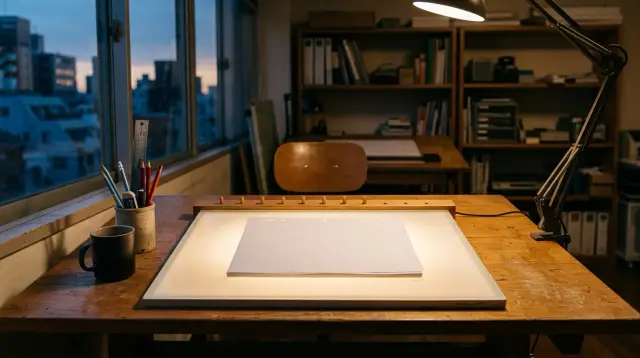
From the small screen to the world
日本のアニメは、いまや国境を越えて楽しまれる文化の一つになった。海外の街角で日本の話をすると、まずアニメの話題を挙げる人も珍しくない。
Japanese anime has now become one of the cultures enjoyed across borders. When talking about Japan on street corners overseas, it is not rare for people to bring up anime first.
日本で連続テレビアニメが定着したのは、昭和三十年代の後半である。制作費を抑えるために、動かす絵の枚数を減らす工夫が生まれ、それが日本独自の表現スタイルを形作った。
Serialized television anime took hold in Japan in the latter half of the Shōwa 30s (the early 1960s). To hold down production costs, techniques of reducing the number of moving drawings emerged, and these shaped a style of expression unique to Japan.
日本では、夜遅い時間帯に放送される「深夜アニメ」という枠が定着し、大人の視聴者を意識した作品が数多く作られてきた。子ども向けという見方は、すでに過去のものになりつつある。
In Japan the slot of "late-night anime", broadcast at late hours, has taken root, and many works aimed at adult viewers have been made. The view that anime is for children is becoming a thing of the past.
海外での広がりは、テレビ放送やビデオの普及を機に加速した。各国で吹き替えや字幕が作られ、それぞれの言語で育ったファンが、いまの国際的な人気を支えている。
Its spread overseas accelerated with the arrival of television broadcasts and the spread of video. Dubs and subtitles were made in each country, and fans who grew up in each language underpin today's international popularity.
決定的だったのは、動画配信サービスの普及である。放送と同時期に世界中で視聴できるようになり、海外の市場は制作側にとっても無視できない存在になった。
What proved decisive was the spread of video streaming services. Viewing around the world at roughly the same time as broadcast became possible, and overseas markets became a presence the production side could no longer ignore.
劇場で公開される長編アニメ映画も、世界の映画祭で高く評価されてきた。アカデミー賞の長編アニメーション賞を受賞した日本作品の例もある。
Feature-length anime films released in cinemas have also been highly rated at film festivals around the world. There are even examples of Japanese works winning the Academy Award for Best Animated Feature.
フランスやアメリカなど各地で、日本のアニメやマンガを扱う大規模なイベントが毎年開かれている。会場では、衣装を作り込んだ来場者が国籍を問わず交流する光景が見られる。
In many places such as France and the United States, large events dealing with Japanese anime and manga are held every year. At the venues one sees visitors in elaborate costumes mingling regardless of nationality.
制作会社の側も、海外の視聴者の好みをふまえて、配信先に合わせた企画や宣伝を考えるようになった。国内向けだけを想定した作り方は、少しずつ変わってきている。
Production companies, too, have begun to design plans and promotion suited to the platform, building on overseas viewers' tastes. The way of making things that assumed only a domestic audience is gradually changing.
Anime, daily life, and travel
アニメの舞台になった場所を実際に訪れる「聖地巡礼」は、ファンの間で定着した楽しみ方である。人気作品の舞台とあって、静かだった町に国内外から人が訪れる例もある。
"Seichi junrei", visiting places that served as anime settings, has become an established way for fans to enjoy themselves. Because they are settings of popular works, there are cases where once-quiet towns receive visitors from Japan and abroad.
自治体が地元の商店街と協力し、案内板やスタンプラリーを用意する動きも広がった。ただし、住民の生活を乱さないよう、マナーを呼びかける必要も生まれている。
Moves have spread in which local governments cooperate with neighborhood shopping streets to prepare signs and stamp rallies. However, the need has also arisen to call for good manners so as not to disrupt residents' lives.
学習者の動機としても、アニメは大きな存在だ。日本語を学ぶ理由の上位にアニメやマンガへの関心が挙がる調査は、これまでも各国で報告されてきた。
Anime is also a major presence as a motive for learners. Surveys in which interest in anime and manga ranks among the top reasons for studying Japanese have been reported in various countries.
字幕の翻訳が難しいのは、日本語ならではの豊富な一人称や語尾の違いが、人物の性格を暗示しているからだ。「私」「僕」「俺」の選び方一つで、受ける印象は大きく変わる。
Subtitling is difficult because the rich variety of first-person pronouns and sentence endings unique to Japanese hints at a character's personality. A single choice among "watashi", "boku", and "ore" changes the impression greatly.
学習に役立てるなら、好きな作品を日本語の字幕で見直し、気になった表現を自分のノートに整理してみるといい。場面と言葉を結びつけて覚えると、定着しやすい。
To put it to use for study, try rewatching a favorite work with Japanese subtitles and organizing the expressions that catch your attention in your own notebook. Remembering by linking scene and wording makes retention easier.
もっとも、作品の言葉は、役割語や若者言葉、誇張した言い回しに満ちている。そのまま日常会話に持ち込むと、周囲を戸惑わせる場合もあるので注意したい。
That said, the language of the works is full of role language, youth slang, and exaggerated phrasings. Bringing it as-is into everyday conversation can sometimes puzzle those around you, so be careful.
アニメの影響は映像にとどまらず、音楽やファッション、食文化にまで及んでいる。作品に登場した料理を再現して楽しむ家庭や飲食店も、国内外で珍しくない。
The influence of anime goes beyond the screen, reaching music, fashion, and food culture. Households and restaurants that re-create dishes appearing in works for enjoyment are not rare at home or abroad.
The unseen side of the studios
華やかな成功の陰で、制作の現場は厳しい環境に置かれてきた。とりわけ、絵を描くアニメーターの収入の低さと長時間労働は、以前から繰り返し指摘されている。
Behind the glittering success, production sites have been placed in harsh conditions. In particular, the low income and long hours of animators who draw the pictures have been pointed out repeatedly for some time.
作品ごとに出資者が集まる「製作委員会」方式は、リスクを分散できる利点がある反面、利益が制作現場に届きにくいという課題も指摘されている。
The "production committee" method, in which investors gather for each work, has the advantage of spreading risk, but it has also been pointed out that profits struggle to reach the production floor.
違法にアップロードされた海賊版は、作り手に正当な対価が渡らない原因の一つとされる。正規の配信で作品を見ることは、次の作品を支える最も手軽な方法である。
Illegally uploaded pirated copies are considered one cause of creators not receiving fair compensation. Watching works through legitimate streaming is the easiest way to support the next work.
世界的な需要の高まりを背景に、人材の育成や適正な報酬を求める声も強まっている。作品を愛する人ほど、その作り手の暮らしにも目を向けたい。
Against a backdrop of rising global demand, voices calling for training of talent and fair pay are growing stronger. The more one loves the works, the more one should look at the lives of their makers.
Words in this article
近年は、描く作業にデジタル技術を取り入れ、海外のスタジオと共同で制作する例も増えた。国境を越えた分業は、効率化の可能性を広げる一方、品質の管理という新しい難題も生んでいる。
In recent years there are more cases of adopting digital technology for drawing and co-producing with overseas studios. Cross-border division of labor widens the possibility of efficiency but also generates a new difficulty: quality control.
日本のアニメは、国の政策として「クールジャパン」の一環に位置づけられてきたが、その魅力の本体は、無数の作り手の工夫と情熱にほかならない。
Japanese anime has been positioned as part of "Cool Japan" as national policy, but the core of its appeal is nothing other than the ingenuity and passion of countless makers.
アニメを楽しむことは、それ自体が日本への入口になる。同時に、その背後にある産業や人の営みを知ることで、一本の作品の見え方は、少し変わってくるはずだ。
Enjoying anime is itself an entrance to Japan. At the same time, learning about the industry and human labor behind it should shift, a little, how a single work looks.