

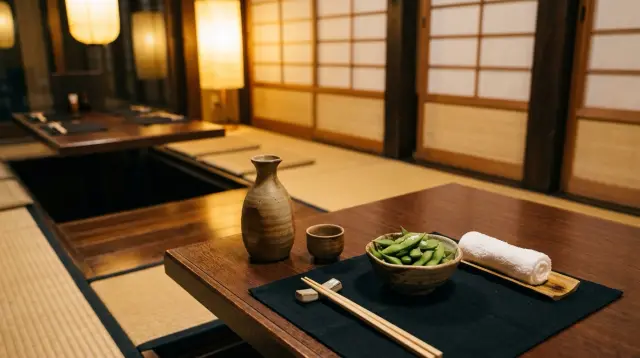
Is a drinking party an extension of work?
日本の会社では、仕事のあとに上司や同僚と食事に行く「飲み会」が昔からよく開かれてきました。歓迎会、送別会、忘年会、新年会など、季節ごとの行事もあります。
In Japanese companies, 「飲み会」, going out to eat and drink with bosses and colleagues after work, has long been common. There are seasonal events too: welcome parties, farewell parties, year-end parties and New Year parties.
仕事中には話しにくいことを、お酒の席で気軽に話せる、というのがよく言われる良い点です。一方で、近年は参加を強制しない会社も増えています。
A commonly cited advantage is that you can talk casually about things that are hard to say during work. On the other hand, more companies in recent years do not force people to take part.
飲み会では、会社の中の立場がそのまま続きます。「無礼講」と言われても、完全に上下を忘れていいわけではありません。
At a drinking party, your position in the company carries over. Even when someone says 「無礼講」, meaning no formalities, you should not forget rank entirely.
Seats and the first toast
席は、入口から遠い奥が上座で、上司や主賓が座ります。若手は入口に近い下座に座り、注文や飲み物の追加、料理の取り分けを手伝います。
In terms of seating, the far end from the entrance is the 「上座」, for the boss and guest of honor. Younger staff sit in the 「下座」 near the door and help with orders, extra drinks and serving food.
最初の一杯は、全員が揃ってから乾杯するのが普通です。幹事や上司が「それでは、乾杯!」と言うまでは、飲み始めてはいけません。飲めない人は、お茶やジュースでも構いません。
The first drink is normally a toast once everyone is present. You must not start drinking until the organizer or boss says 「それでは、乾杯!」. People who cannot drink alcohol are welcome to have tea or juice.
乾杯のとき、上司のグラスより自分のグラスを少し低くして合わせるのが、敬意を表す方法として知られています。
When clinking glasses, holding yours slightly lower than your boss's glass is a well-known way to show respect.
新入社員が幹事を任されることもよくあります。幹事の仕事は、店の予約、参加者への連絡、会費の集金、そして当日の進行です。苦手な食べ物がないか、事前に聞いておくと親切です。
New employees are often asked to be the organizer. The job covers booking the restaurant, contacting attendees, collecting the fee and running the event. It is thoughtful to ask beforehand whether anyone cannot eat certain foods.
料理が運ばれてきたら、上司やお客様に先に取ってもらうのがマナーです。大皿の料理は、「お取りしましょうか」と声をかけて、取り分けてあげるとよく気がつく人だと思われます。
When food arrives, the manner is to let your boss or the guest take some first. For dishes on a big plate, offering 「お取りしましょうか」 and serving them makes you seem attentive.
飲み過ぎは禁物です。自分の限界を知り、酔って大声を出したり、上司に失礼な話し方をしたりしないようにしましょう。「お酒の失敗」は、いつまでも覚えられてしまいます。
Drinking too much is a no-no. Know your limit, and don't shout when drunk or speak rudely to your boss. A “drunken blunder” is remembered for a long time.
なお、日本でお酒が飲めるのは二十歳になってからです。年齢に関係なく、飲みたくない人に勧めないことも、大切な心づかいです。
Note too that in Japan you may drink alcohol only from the age of twenty. Regardless of age, not pressing drinks on those who do not want them is also important consideration.
Pouring drinks, and a sample dialogue
日本には、お酒を注ぎ合う「お酌」の習慣があります。上司のグラスが少なくなったら、「お注ぎしましょうか」と声をかけ、両手で瓶を持って注ぎます。注いでもらう側は、グラスを持って受けます。
Japan has the custom of 「お酌」, pouring drinks for one another. When your boss's glass is running low, offer 「お注ぎしましょうか」 and pour holding the bottle with both hands. The person being poured for holds up their glass.
部下「部長、お注ぎしましょうか。」
Staff member: “Director, shall I pour you a drink?”
部長「ああ、ありがとう。君も飲んで。」
Director: “Ah, thank you. You have some too.”
部下「申し訳ございません。私はお酒が苦手でして、ウーロン茶をいただいております。でも、お話を伺えて光栄です。」
Staff member: “I'm sorry, I'm not good with alcohol, so I'm having oolong tea. But I am honored to hear what you have to say.”
部長「そうか。無理しなくていいよ。」
Director: “I see. You don't have to push yourself.”
お酒を断るときは、「飲めません」と短く言い切るより、理由と代わりの飲み物を添えると、場の雰囲気を壊しません。無理に飲ませることは、「アルコールハラスメント」と呼ばれ、問題になります。
When you decline alcohol, adding a reason and a substitute drink, rather than just a flat “I can't drink,” avoids spoiling the mood. Forcing someone to drink is called 「アルコールハラスメント」 and is regarded as a problem.
Topics and how to wrap up
話題は、趣味や出身地、最近行った場所などが無難です。仕事の悪口や、他の人のうわさ、政治や宗教の話は、避けた方がいいでしょう。
Safe topics are hobbies, hometowns and places you visited recently. It is better to avoid complaining about work, gossiping about others, and politics or religion.
一次会のあとに、場所を変えて「二次会」に行くこともあります。参加は自由ですから、終電や翌日の仕事があるときは、「明日、早いので、今日はここで失礼いたします」と丁寧に断ってかまいません。
After the first party, people sometimes move on to a 「二次会」, a second party. Attendance is optional, so if you have a last train or work the next day, you can politely decline: 「明日、早いので、今日はここで失礼いたします」.
お金は、上司がおごってくれることもあれば、全員で割り勘にすることもあります。おごってもらったら、その場で「ごちそうさまでした」と言い、翌日にも「昨日はありがとうございました」とお礼を伝えます。
As for the bill, sometimes the boss treats you, and sometimes everyone splits it. If you are treated, say 「ごちそうさまでした」 on the spot and thank them again the next day with 「昨日はありがとうございました」.
Words in this article
飲み会の目的は、お酒を飲むことではなく、人と人の距離を縮めることです。お酒が飲めなくても、感謝の気持ちと笑顔があれば、十分に参加できます。
The aim of a drinking party is not to drink but to bring people closer. Even if you cannot drink, gratitude and a smile are enough to take part fully.