

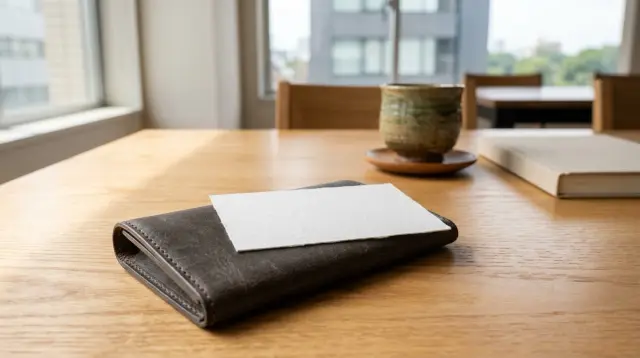
Exchanging business cards is your first piece of work
日本のビジネスでは、初めて会った人と名刺を交換することから、すべてが始まります。
In Japanese business, everything begins with exchanging cards with someone you have just met.
名刺は単なる連絡先のカードではなく、その人自身と会社の顔だと考えられています。そのため、扱い方が丁寧かどうかで、相手に与える印象が大きく変わります。
A card is not just a contact detail; it is regarded as the face of the person and the company. How carefully you handle it changes the impression you make.
基本は三つです。立ち上がること、両手で渡すこと、そして相手が読める向きで差し出すことです。
There are three basics: stand up, hand it over with both hands, and offer it facing the other person so they can read it.
先に出すのは、訪問した側の人です。同じ会社の人と一緒に行く場合は、役職が上の人から順に交換するのが一般的です。
The visiting side goes first. If you visit with colleagues, it is common for the person with the higher position to exchange first, and the rest follow in order.
What to say during the exchange
名刺を出すときは、会社名と部署、名前をはっきり言います。「ABC商事の営業部のグエンと申します」という形が基本です。自分のことには「申します」という謙譲語を使います。
When you hand over your card, state your company, department and name clearly. The basic form is 「ABC商事の営業部のグエンと申します」. Use the humble verb 「申します」 about yourself.
受け取るときは、「頂戴いたします」と言って両手で受け取ります。同時に交換する場合は、右手で自分の名刺を差し出し、左手で相手のものを受けてから、すぐ両手で持ち直します。
When receiving, say 「頂戴いたします」 and take the card with both hands. If you exchange at the same time, offer yours with your right hand, receive theirs with your left, and then hold it with both hands right away.
Sample dialogue: a first visit
グエン「お忙しいところ、お時間をいただきありがとうございます。ABC商事のグエンと申します。どうぞよろしくお願いいたします。」
Nguyen: “Thank you for making time despite your busy schedule. I am Nguyen from ABC Shoji. I look forward to working with you.”
山田「山田商会の山田でございます。名刺を頂戴いたします。こちらこそ、どうぞよろしくお願いいたします。」
Yamada: “I am Yamada of Yamada Shokai. I gratefully receive your card. The pleasure is mine; I look forward to working with you.”
グエン「失礼ですが、お名前はどのようにお読みすればよろしいでしょうか。」
Nguyen: “Excuse me, how should I read your name?”
山田「豊と読みます。よく間違えられるんですよ。」
Yamada: “It is read Yutaka. People often get it wrong.”
読み方が分からないときは、分からないまま呼ばずに、その場で丁寧に聞くほうが好印象です。後で間違えるほうがずっと失礼だからです。
If you don't know how to read a name, ask politely on the spot instead of guessing. Getting it wrong later is far ruder.
Once the meeting begins
受け取った名刺は、すぐにしまわずに、名刺入れの上に載せて机に置きます。相手が複数いる場合は、座っている順番どおりに並べておくと、名前を間違えません。
Do not put a received card away immediately. Place it on your card holder on the table. If several people are present, line the cards up in the order they sit so you never mix up names.
会議が終わったら、「失礼いたします」と一言言って、名刺入れに丁寧にしまいます。
When the meeting ends, say 「失礼いたします」 and put the cards carefully into your holder.
やってはいけないことも覚えておきましょう。ズボンのポケットや財布に入れること、名刺の上にメモを書くこと、折ったり、手でいじったりすることは、どれも失礼にあたります。
Remember the things not to do: putting a card in a trouser pocket or wallet, writing notes on it, folding it or fiddling with it. All of these are considered rude.
名刺を切らしてしまったときは、「あいにく名刺を切らしておりまして、申し訳ございません」とお詫びして、口頭で名乗ります。後日、メールで改めて連絡先を送るのが丁寧です。
If you have run out of cards, apologize with 「あいにく名刺を切らしておりまして、申し訳ございません」 and introduce yourself verbally. Sending your contact details by email afterwards is the polite follow-up.
相手の名刺を預かりたいときは、ただ取るのではなく、「お預かりしてもよろしいでしょうか」と一言聞けば安心です。
If you want to keep the other person's card, don't just take it; a quick 「お預かりしてもよろしいでしょうか」 puts everyone at ease.
名刺入れは、自分の名刺と受け取った名刺を分けて入れられるものを選ぶと便利です。相手の目の前で名刺の束を探さなくても、すぐに取り出せるようにしておきましょう。
It helps to choose a card holder that keeps your own cards separate from the ones you receive. Be ready to pull one out immediately instead of rummaging through a stack in front of the other person.
座ったままで渡したり、テーブル越しに投げるように出したりするのも避けたほうがいいでしょう。相手の席まで歩いて行き、手が届く距離で渡します。
Avoid handing a card over while seated, or pushing it across the table as if tossing it. Walk over to the other person and hand it to them within arm's reach.
名刺は会社の「顔」ですから、汚れたり折れたりしたものは渡さずに、いつもきれいなものを多めに用意しておきます。
Your card is the company's “face”, so never hand over a dirty or bent one; always carry a few extra clean ones.
Sample dialogue: when you forgot your cards
グエン「申し訳ございません。本日、名刺を忘れてまいりました。のちほど、メールでご連絡先をお送りしてもよろしいでしょうか。」
Nguyen: “I sincerely apologize; I have left my cards behind today. May I send you my contact details by email later?”
山田「ええ、結構ですよ。お気になさらないでください。」
Yamada: “Of course, that's fine. Please don't worry about it.”
Words in this article
名刺交換は数秒の出来事ですが、そこで見られるのは、あなたの丁寧さと準備です。立つ、両手、名乗る、読む。この四つを落ち着いて行えば、最初の印象はきっと良くなります。
Exchanging cards takes only seconds, but what people see is your courtesy and preparation. Stand, use both hands, introduce yourself, read the name. Do these four calmly and your first impression will surely be good.