

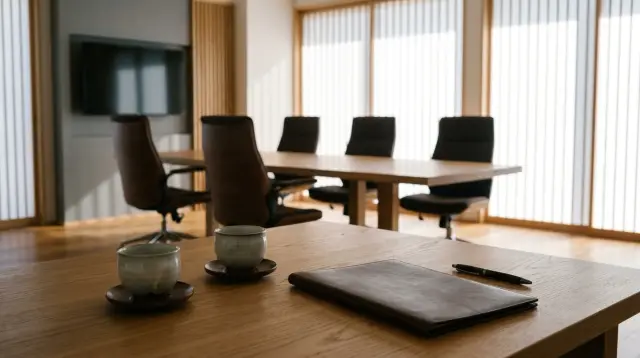
The meeting has already started before it begins
日本の会社で働き始めた外国人が驚くことの一つが、会議の静けさです。みんなが黙って資料を見ていて、議論がほとんど起きない会議も少なくありません。
One thing that surprises foreigners who start working at a Japanese company is how quiet meetings are. It is not rare for everyone to look at the materials silently with almost no debate.
その理由は、会議の前にすでに話がついていることが多いからです。この事前の調整を「根回し」と言います。
The reason is that things have often been settled before the meeting. This advance coordination is called 「根回し」.
根回しは、もともと庭師の言葉です。木を植え替える前に、根の周りを少しずつ掘って準備しておくことを指します。そこから、物事を進める前に関係者に話しておく意味になりました。
Nemawashi was originally a gardener's term: before replanting a tree, you dig around its roots bit by bit to prepare it. From there it came to mean talking to the people concerned before moving a matter forward.
How nemawashi goes
まず、提案の内容を一枚の資料にまとめます。それから、直属の上司、関係する部署の担当者、最後に決裁する人の順に、一人ずつ相談していきます。
First, sum up your proposal on a single sheet. Then consult people one at a time in this order: your direct superior, the persons in charge in related departments, and finally the decision maker.
大切なのは、相手の意見を聞く姿勢です。「決まったことを伝える」のではなく、「ご意見を伺いたい」という形で話すと、相手も協力しやすくなります。
What matters is being ready to listen. If you say “I would like to hear your opinion” rather than “Here is what has been decided,” people find it easier to cooperate.
会議に出てから初めて聞かされると、人は面子をつぶされたように感じます。そのため、会議は話し合う場というより、すでに合意した内容を正式に確認する場になることがあります。
People feel their face has been damaged if they first hear about something in the meeting itself. So a meeting can become less a place for discussion than a place to formally confirm what has already been agreed.
Sample dialogue: nemawashi
部下「課長、少しお時間をいただけませんでしょうか。来週の会議でご提案する新しい企画について、事前にご意見を伺えればと思いまして。」
Staff member: “Section chief, could you spare me a little time? I would like to hear your views in advance on the new project I will propose at next week's meeting.”
課長「いいよ。資料はある?」
Section chief: “Sure. Do you have the materials?”
部下「はい、一枚にまとめました。こちらでございます。予算の部分について、ご意見をいただけますでしょうか。」
Staff member: “Yes, I have summed it up on one sheet. Here it is. Could I have your comments on the budget section?”
課長「うん。良い案だけど、経理部にも先に話しておいた方がいいね。」
Section chief: “Hmm. It's a good plan, but you should talk to Accounting first as well.”
部下「承知いたしました。本日中に経理部の佐藤さんにお話しします。」
Staff member: “Understood. I will speak to Mr. Sato in Accounting today.”
Manners and phrases inside the meeting
会議には、始まる五分前には席に着いて、資料の準備を済ませておきます。新入社員なら、議事録を取る役を任されることも多いので、メモの準備も忘れずに。
Be in your seat five minutes before the meeting starts, with your materials ready. New employees are often asked to take the minutes, so do not forget to prepare for note taking.
意見を言いたいときは、「一点、よろしいでしょうか」と前置きしてから話します。反対する場合も、「おっしゃることはよく分かりますが、一つ気になる点がございます」のように、まず相手を認めます。
When you want to speak, begin with 「一点、よろしいでしょうか」. Even when you disagree, first acknowledge the other person: 「おっしゃることはよく分かりますが、一つ気になる点がございます」.
その場で決められないときは、「一度持ち帰って、検討させていただきます」と言います。これは断りではなく、社内で相談する時間がほしいという意味です。
When you cannot decide on the spot, say 「一度持ち帰って、検討させていただきます」. It is not a refusal; it means you want time to discuss internally.
ただし、断りの意味で使われることもあります。「検討します」と言われたとき、それが本当に前向きなのかは、そのあとの連絡の早さで分かることが多いです。
However, it is sometimes used to mean a refusal. When someone says 「検討します」, whether they are truly positive can often be told by how quickly they get back to you afterwards.
会議が終わったら、決まったことと担当者、期限をまとめた議事録を、できるだけ早く参加者に送ります。
When the meeting ends, send the minutes, with decisions, owners and deadlines, to the attendees as soon as possible.
大きな案件では、会議のほかに「稟議書」という書類を回す会社も多くあります。担当者から順に上司へ回して、判をもらいながら承認を得ていく仕組みです。
For big matters, many companies also circulate a document called a 「稟議書」 in addition to meetings. It is passed from the person in charge up the line, collecting seals as approval is obtained.
資料は、会議の前日までに参加者へ送っておくのが丁寧です。当日に初めて見せると、相手が考える時間がなく、良い意見も出にくくなります。
It is considerate to send the materials to the participants by the day before. If you show them for the first time on the day, people have no time to think and good opinions are harder to come by.
「何かご意見はありますか」と聞かれて、黙ってしまうのはあまり良くありません。特に意見がなくても、「私も同じ意見です」「特にございません」と、一言答える方がいいでしょう。
When asked 「何かご意見はありますか」, staying silent is not ideal. Even if you have nothing in particular to add, it is better to answer briefly, such as 「私も同じ意見です」 or 「特にございません」.
オンライン会議でも基本は同じです。発言しないときはマイクを切り、入室したら「よろしくお願いいたします」と短くあいさつします。
The basics are the same for online meetings. Mute your microphone when you are not speaking, and greet people briefly with 「よろしくお願いいたします」 when you join.
Words in this article
根回しは時間がかかるため、「決めるのが遅い」と言われることもあります。それでも、関係者の納得を得てから進めると、決まった後の実行は速くなります。会議での発言だけでなく、会議の前の一言も、大切な仕事です。
Nemawashi takes time, so Japanese companies are sometimes called slow at deciding. Even so, moving ahead only after the people involved are on board makes execution faster once the decision is made. Not only what you say in the meeting but also a word beforehand is important work.